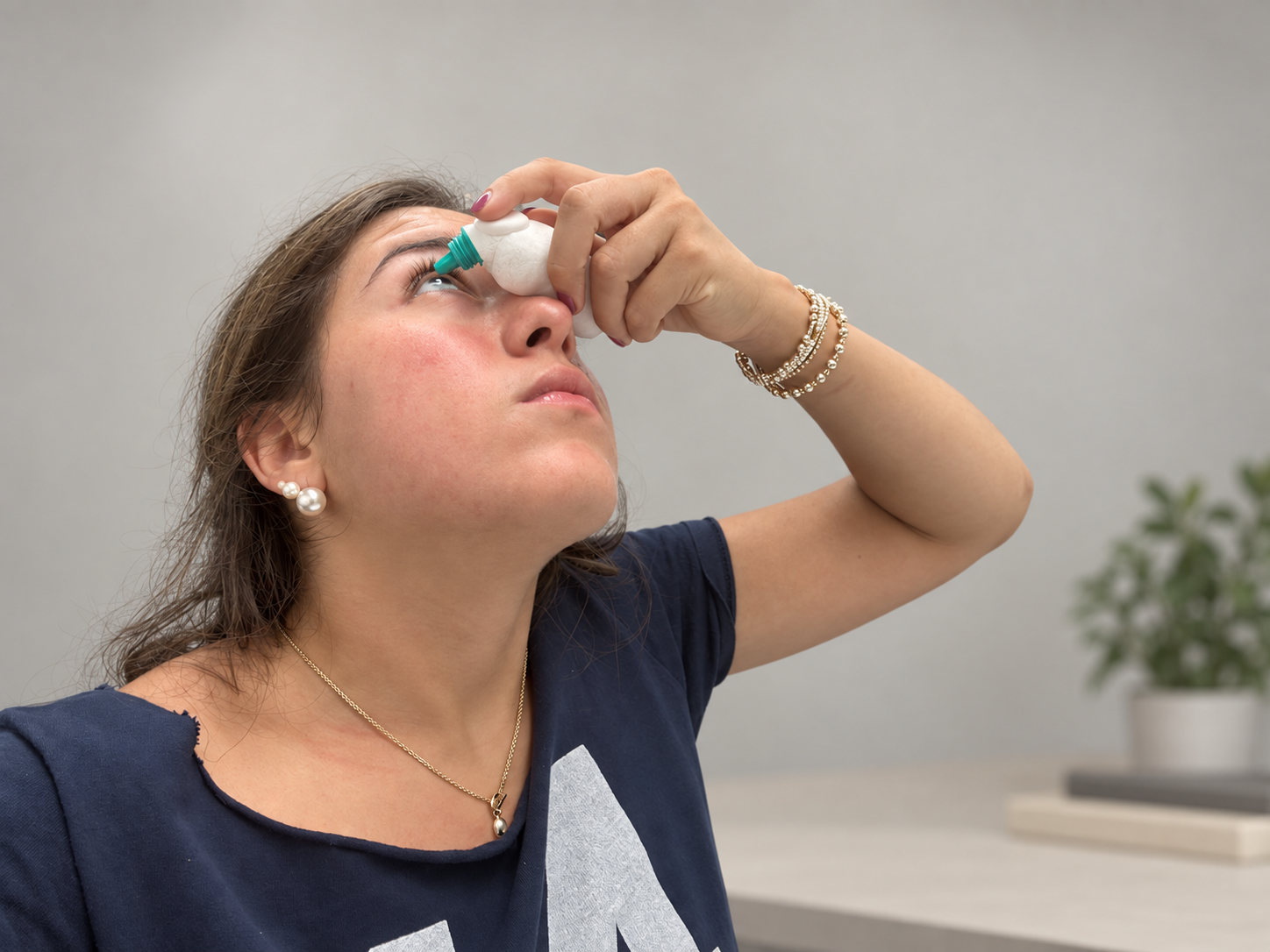
Hand tremors and reduced grip strength can make aligning and squeezing a conventional eyedrop bottle difficult without assistance.
Healthcare + Inclusive DesignConcept Development · 2026
Accessible
Eyedrop
Dispenser
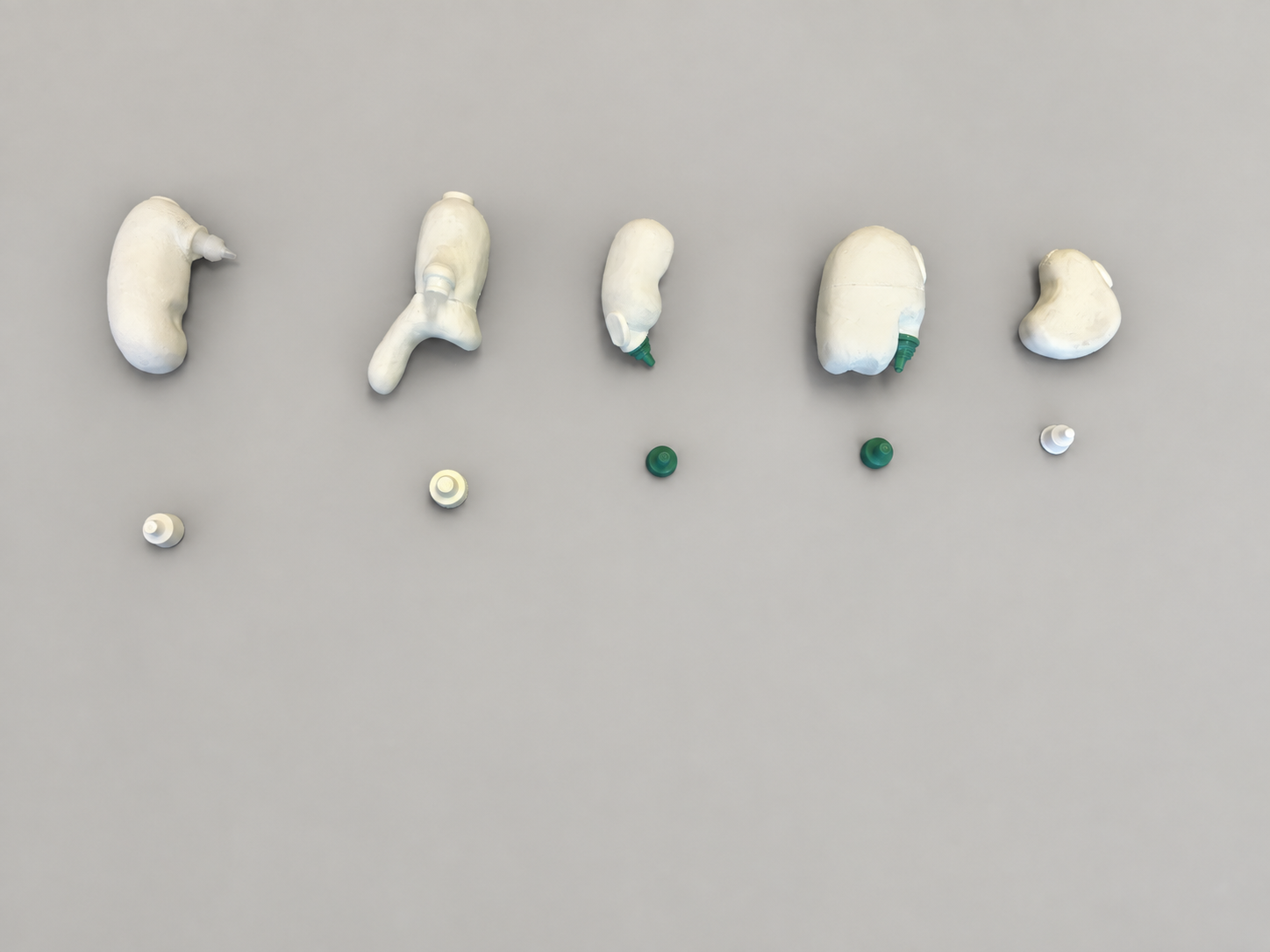
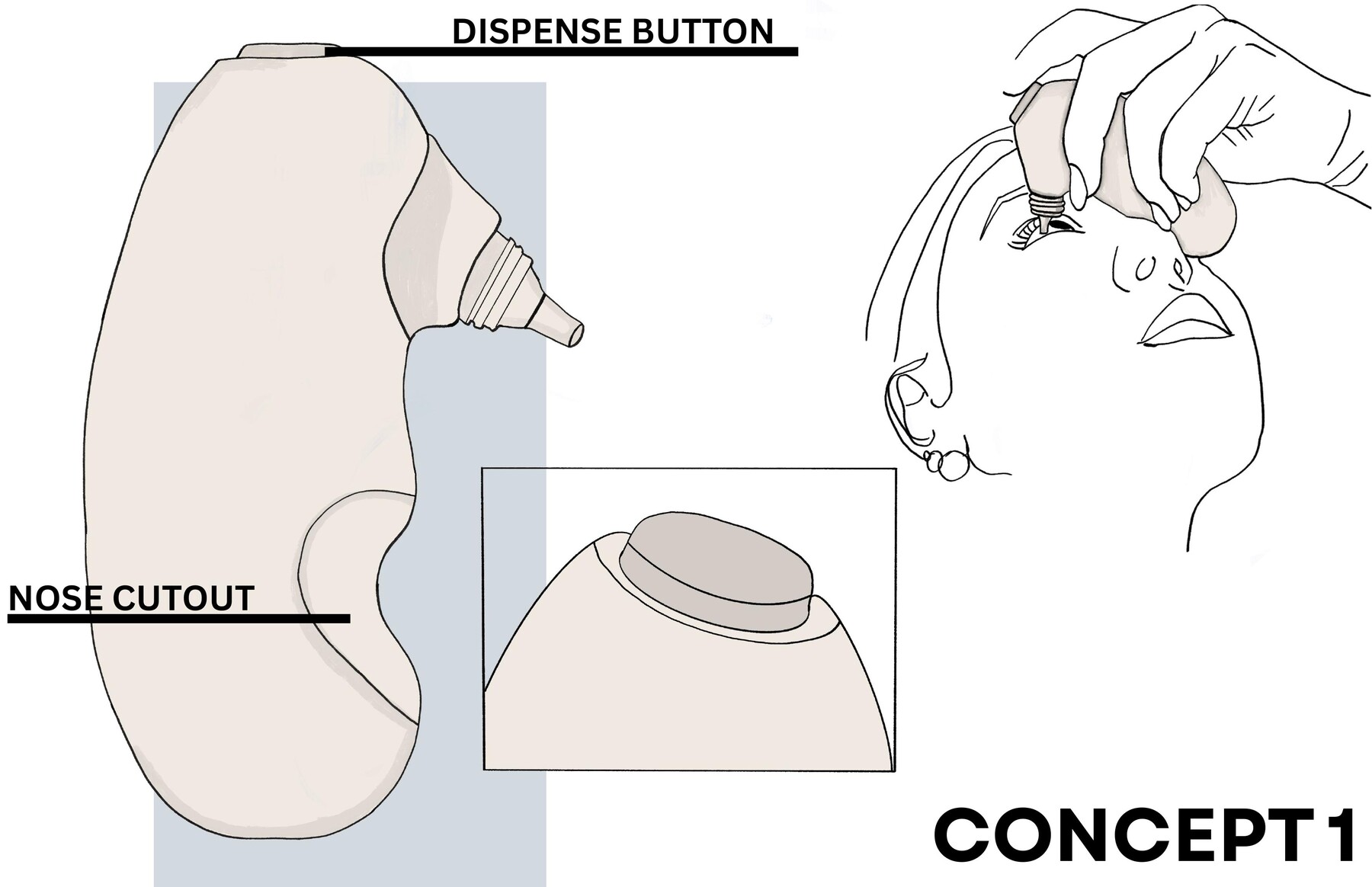
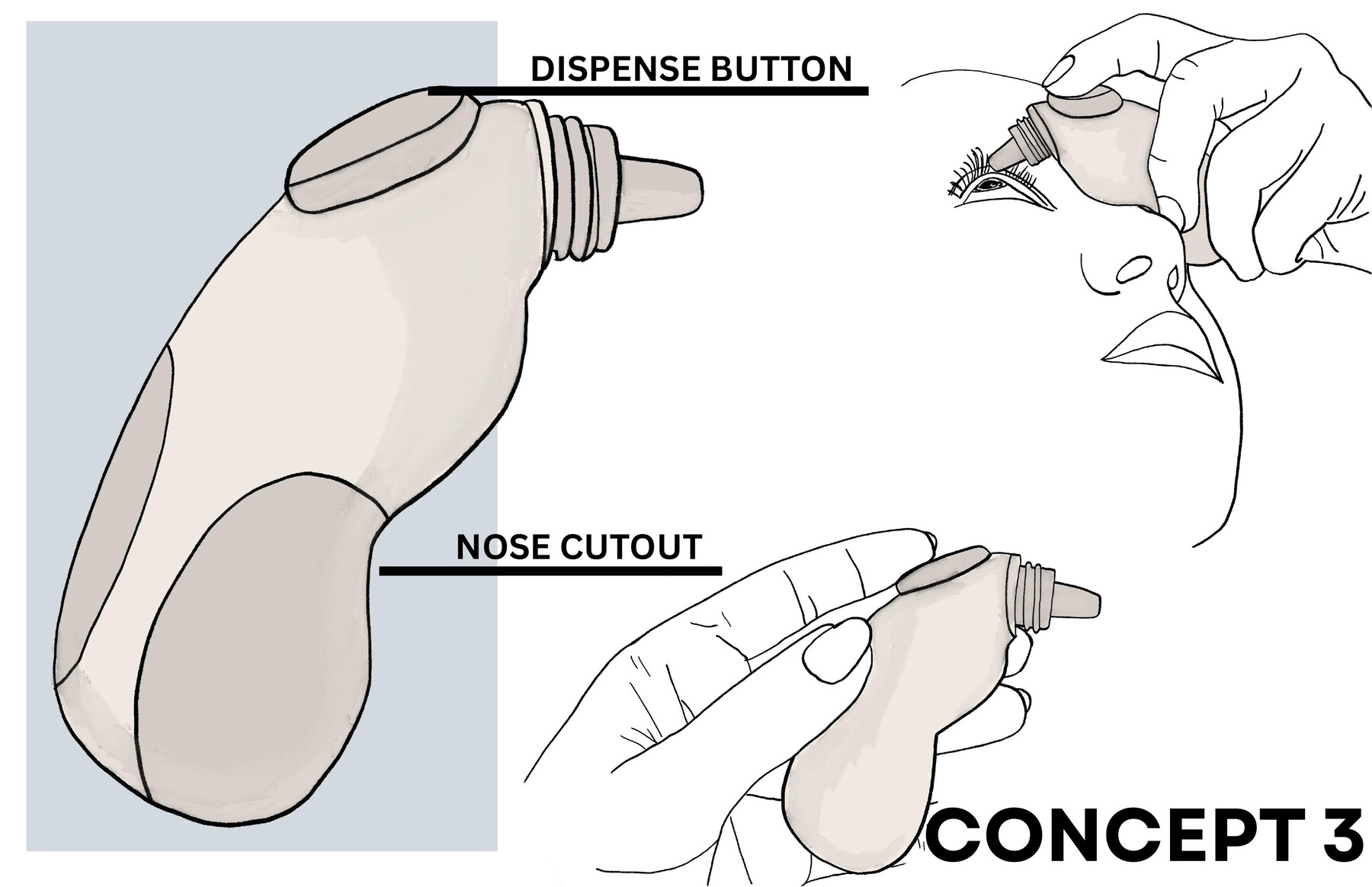
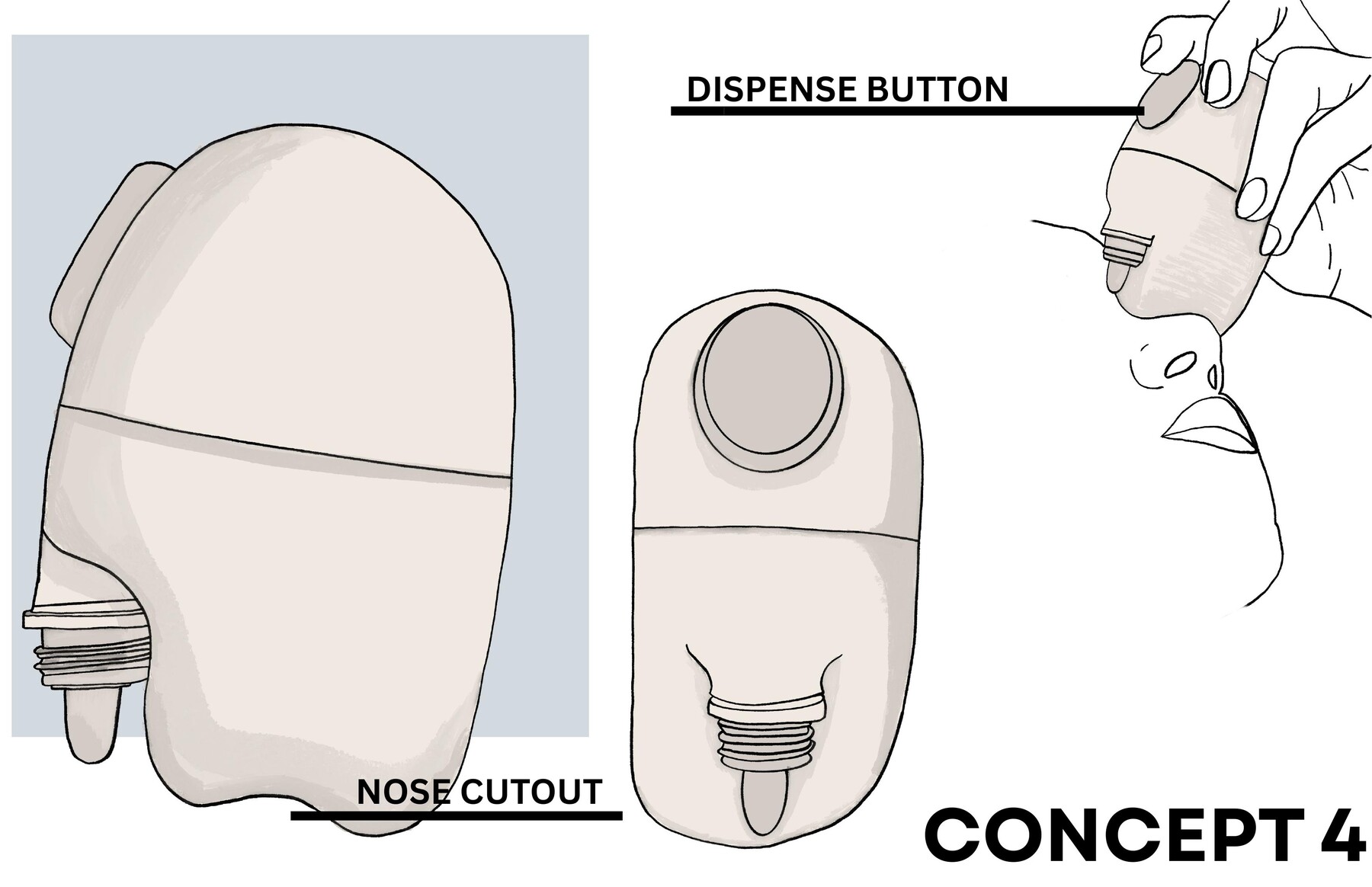
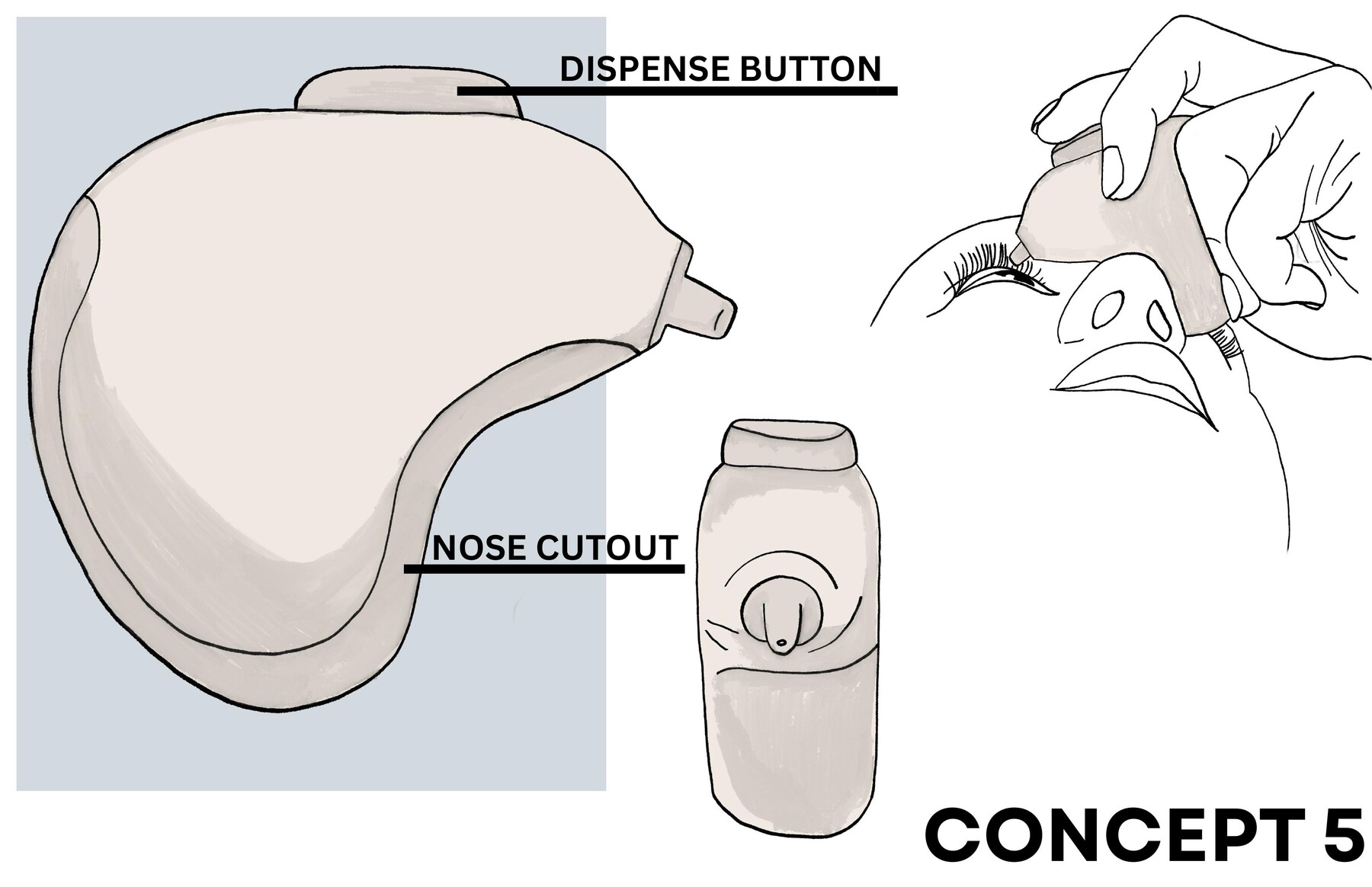
Five concepts for a reusable, button-operated eyedrop dispenser designed for people with hand tremors, limited grip strength, or less experience applying drops.
Enable stable, one-handed dispensing so the other hand remains free to hold the eye open when needed.
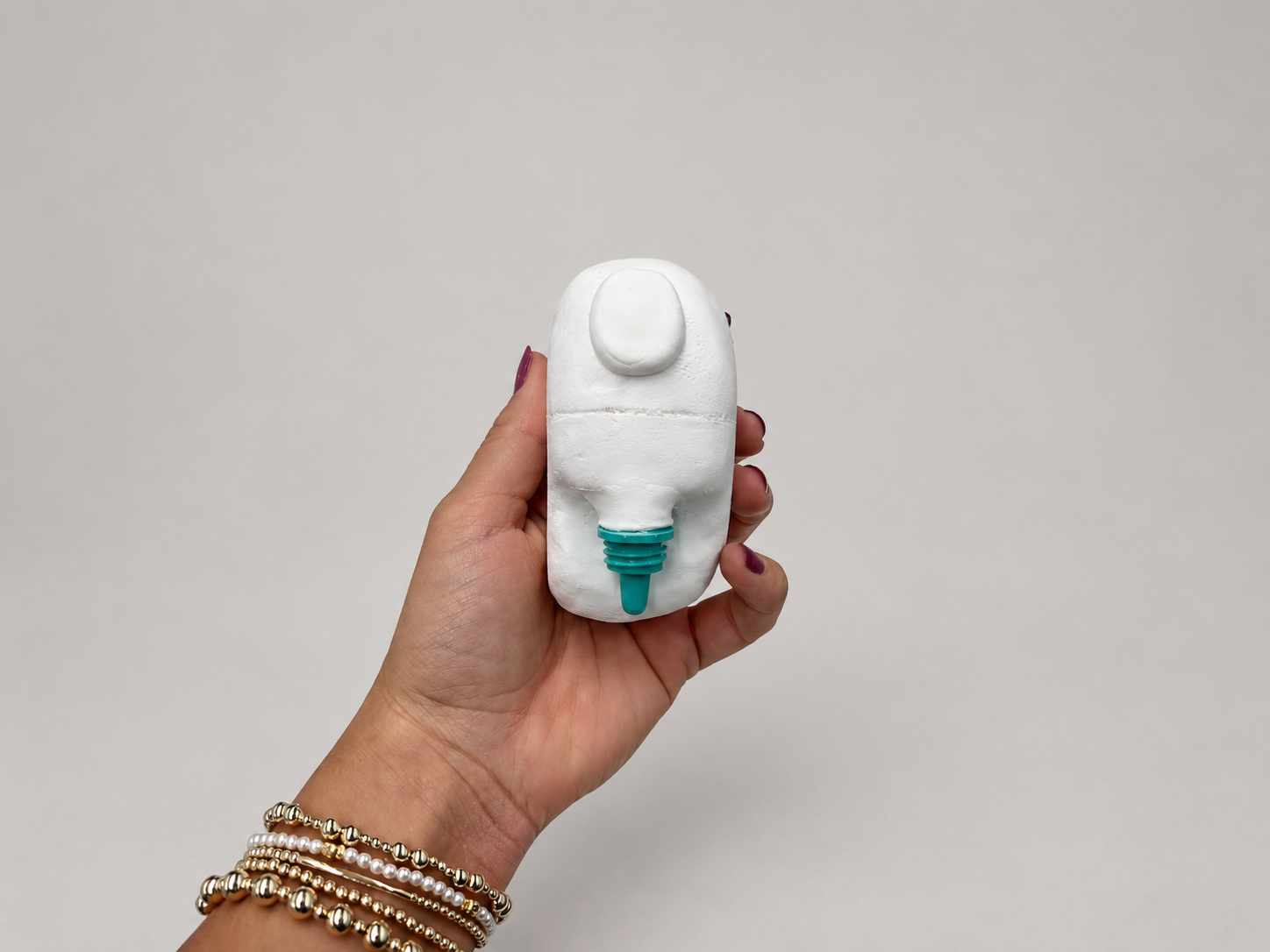
Five reusable concepts combine push-button activation with face-supported positioning, portable forms, and access to both eyes.
Human Context
The project began with a loss of independence
This project began with someone close to me: a water polo player who experiences hand tremors. He is usually able to manage his daily routine independently, but after demanding practices, fatigue makes it difficult to steady, align, and squeeze a traditional eyedrop bottle. At times, he has to rely on his sister to administer the drops.
His experience revealed that the challenge extends beyond tremors alone. Reduced grip strength, fatigue, and limited familiarity with eyedrops can turn a simple routine into a task that requires assistance.
The opportunity was not simply easier squeezing—it was a more stable, confident way to self-administer.
Market Gap
Most existing aids still require squeezing
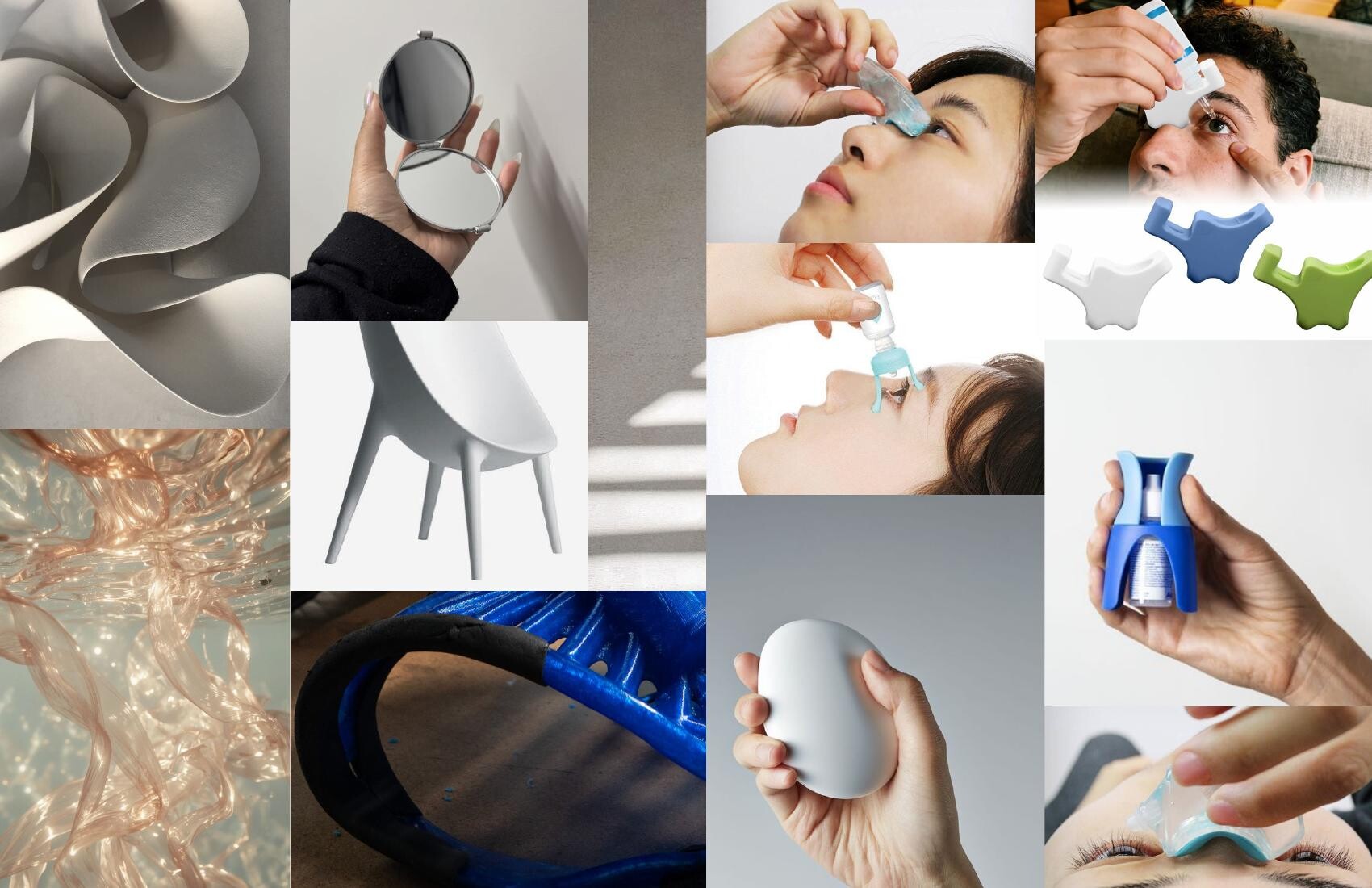
Market research showed that many existing aids clip onto disposable eyedrop bottles. While they may help with positioning, users still have to squeeze the original package.
That creates two missed opportunities: the aid is tied to a disposable bottle, and the primary grip action remains unchanged.
01Integrated reusable vessel instead of a disposable add-on
02Push-button dispensing instead of forceful squeezing
03Face contact that guides alignment above either eye
Independent use shaped every concept
Operate the dispenser with one hand so the other can hold the eyelid open.
Replace squeezing with a clear, easy-to-press button mechanism.
Use the nose or surrounding face as a repeatable positioning reference.
Create a compact refillable form that works for both eyes and everyday users.
Broad Ideation
Exploring position, grip, and portability
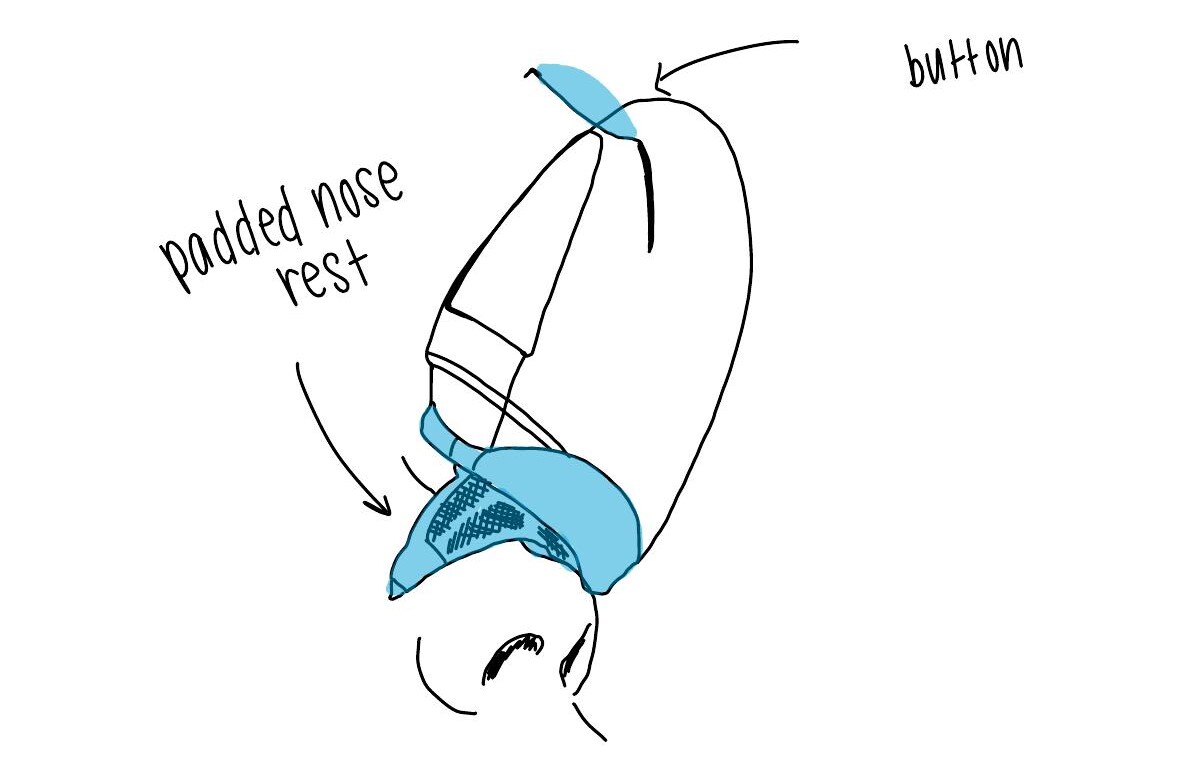
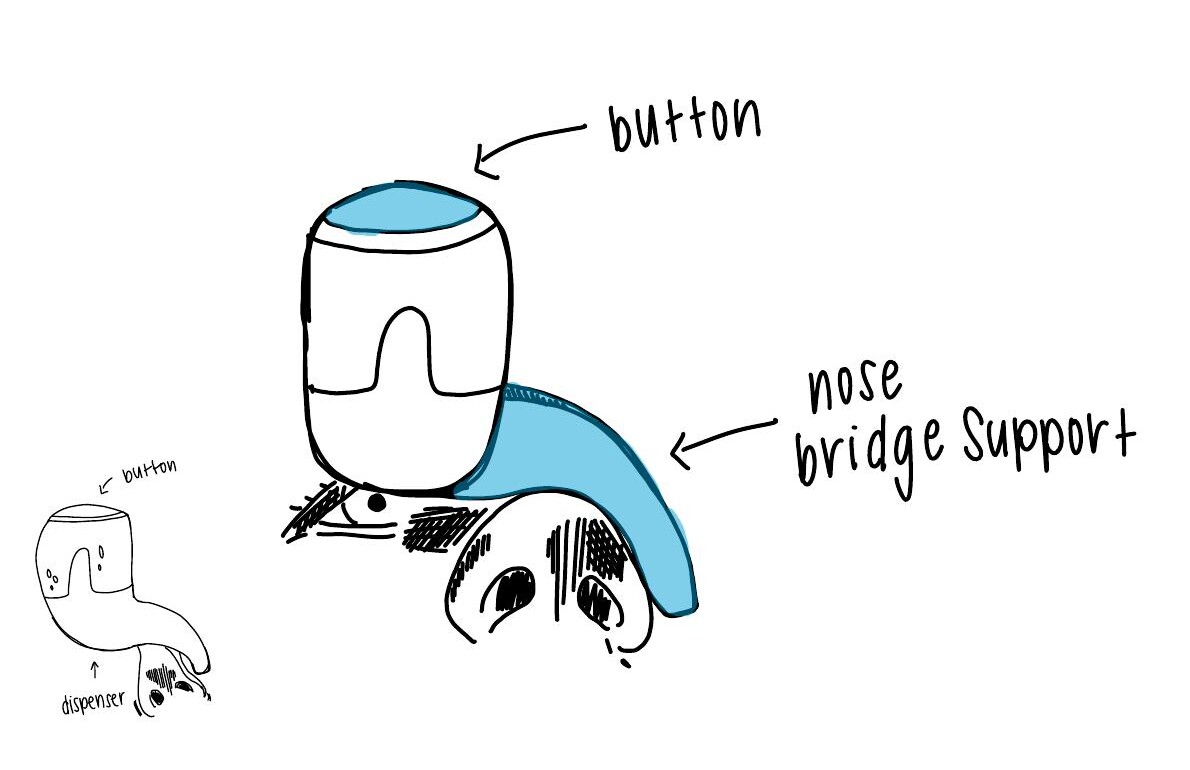
Final Five
Comparing five approaches to alignment and grip
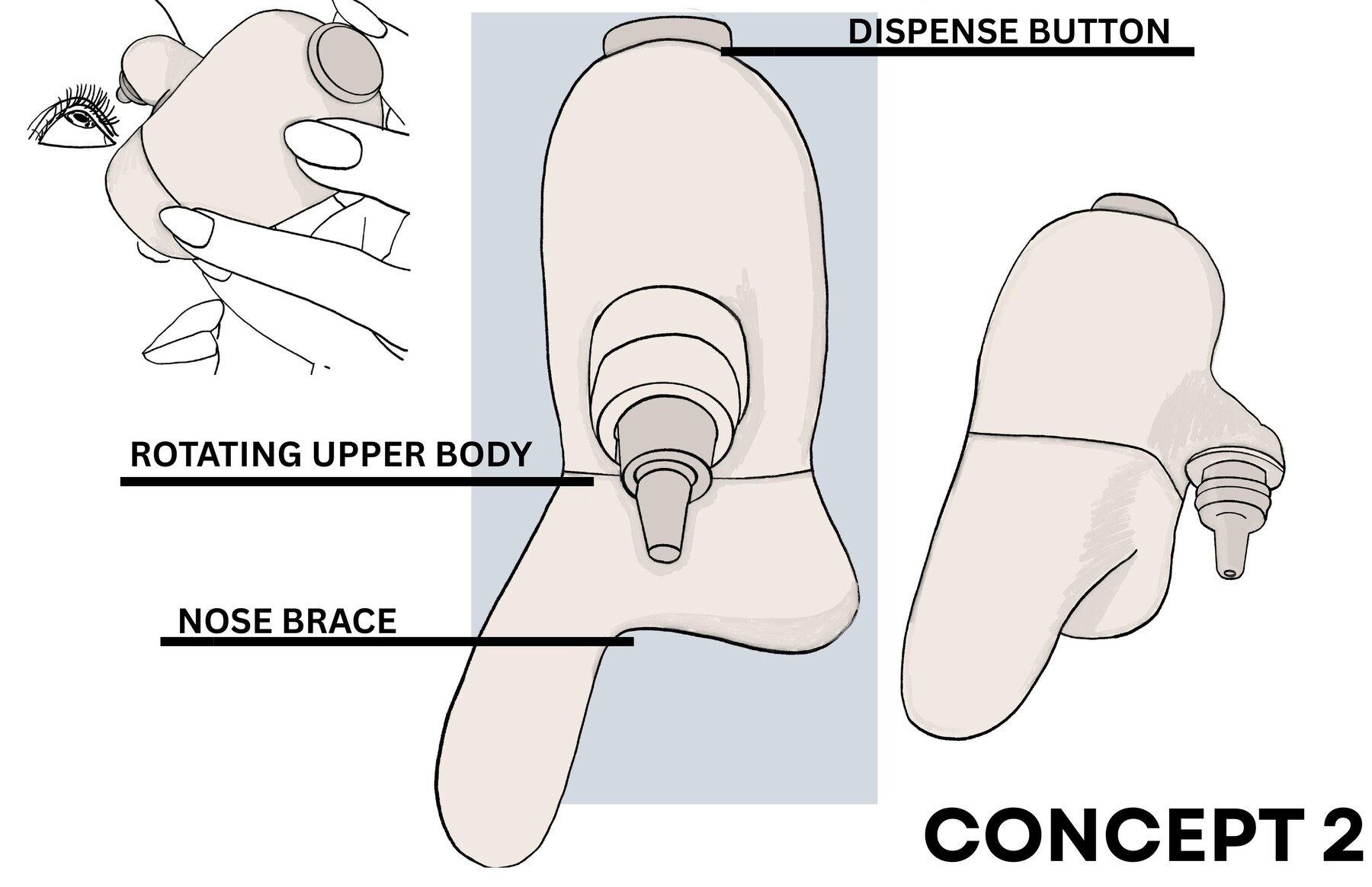
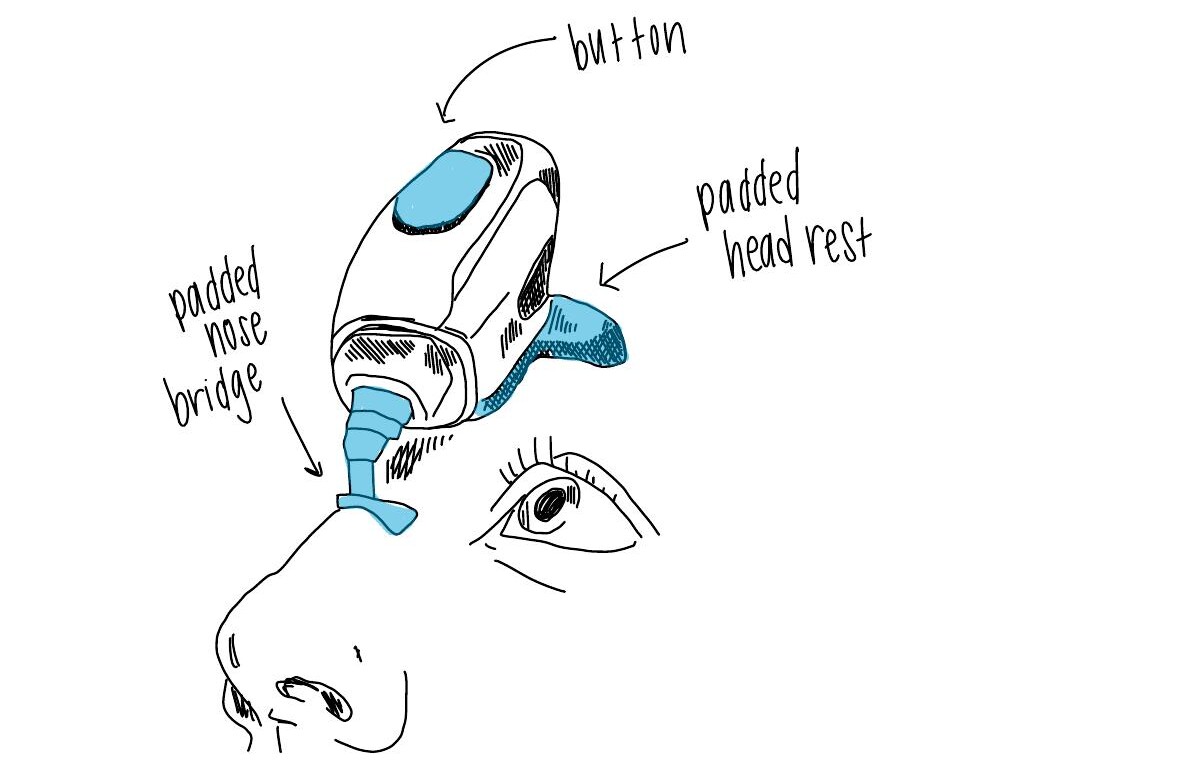
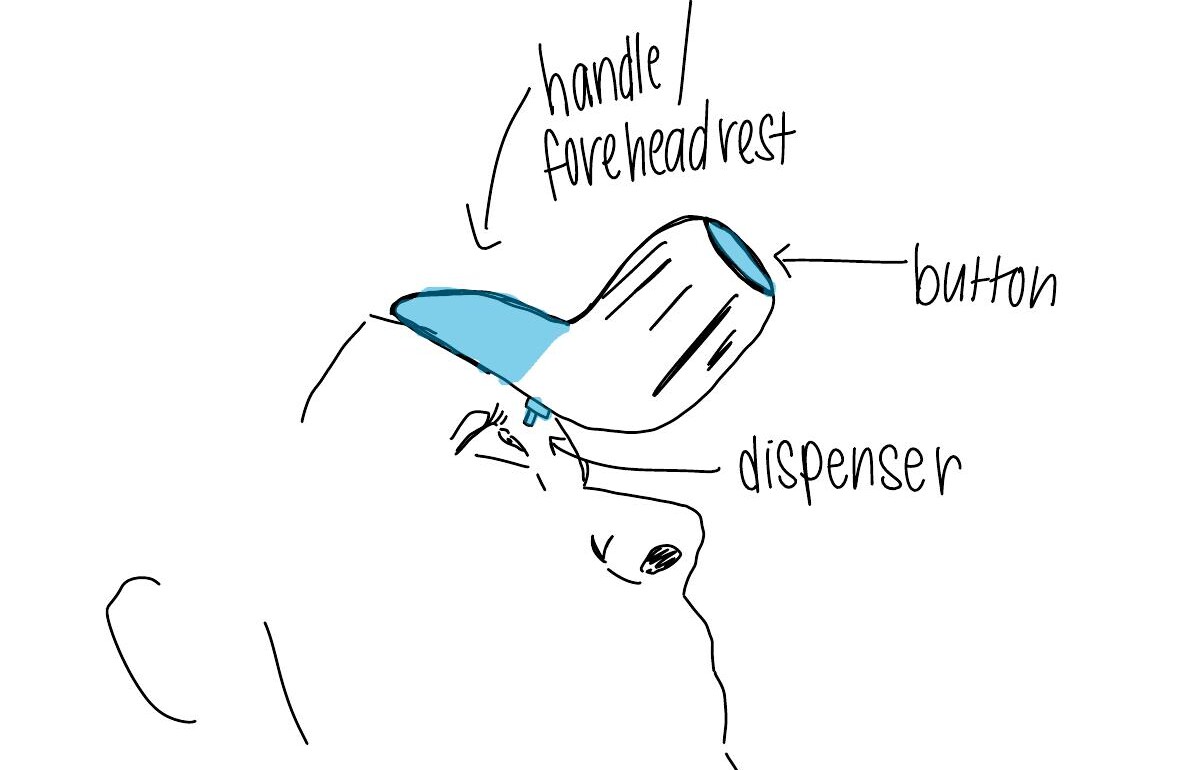
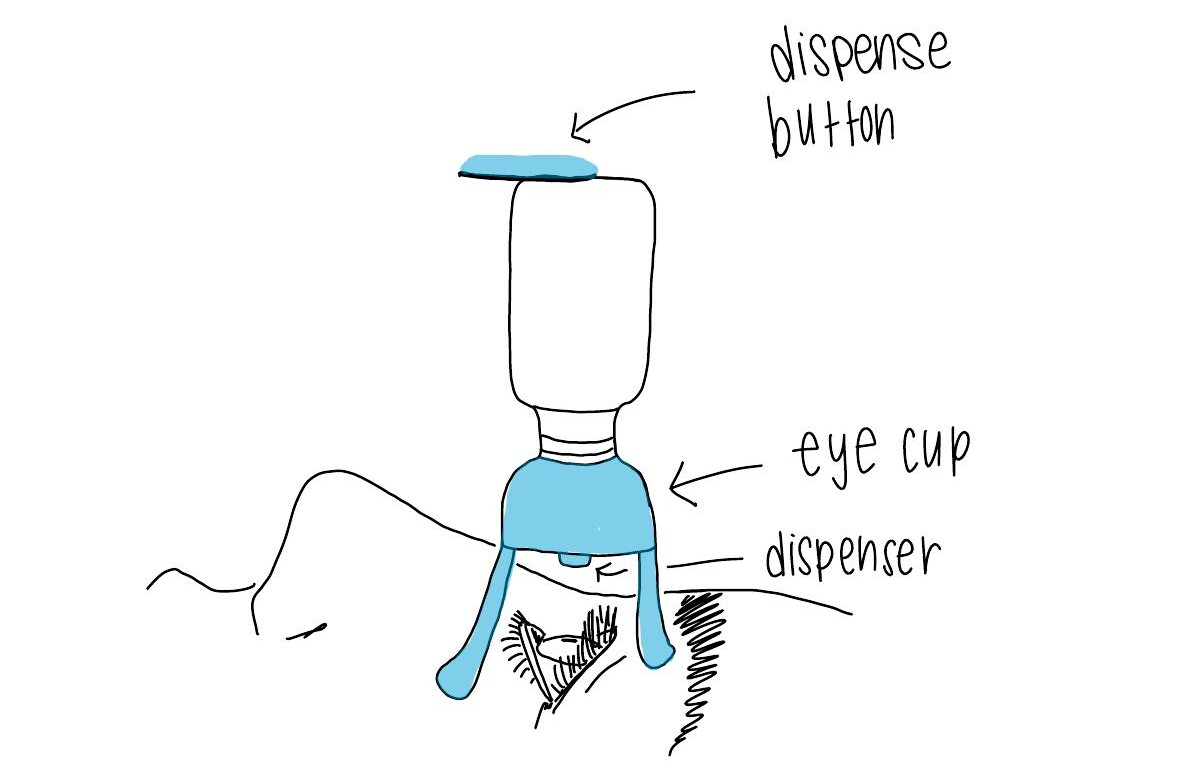
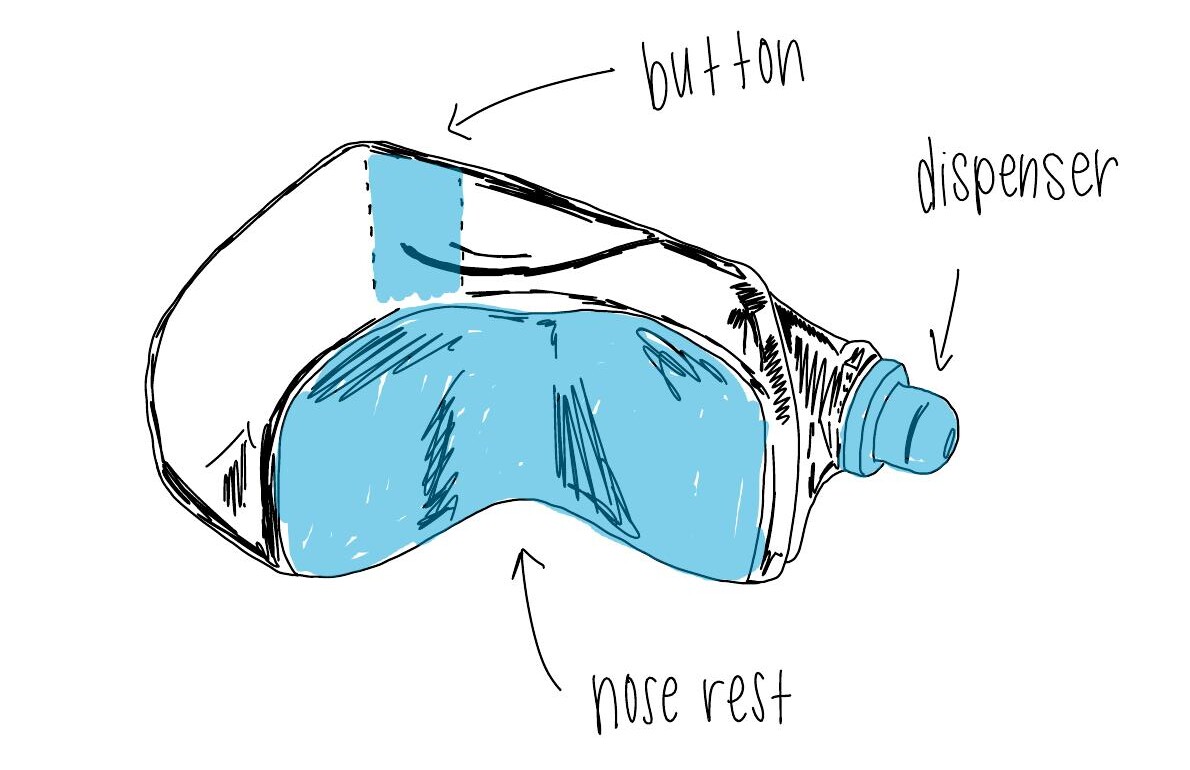
The final set tests different relationships between the hand, nose, eye, and button. Each direction supports one-handed use while varying how the product is held, rested, rotated, and carried.
Physical models for grip and face positioning