Stuffed animals often end up crowded on beds, floors, or hidden together in oversized bins.
Industrial DesignStorage + Organization
Cub
Corner
A playful, compact stuffed-animal shelf that turns everyday storage into a display.
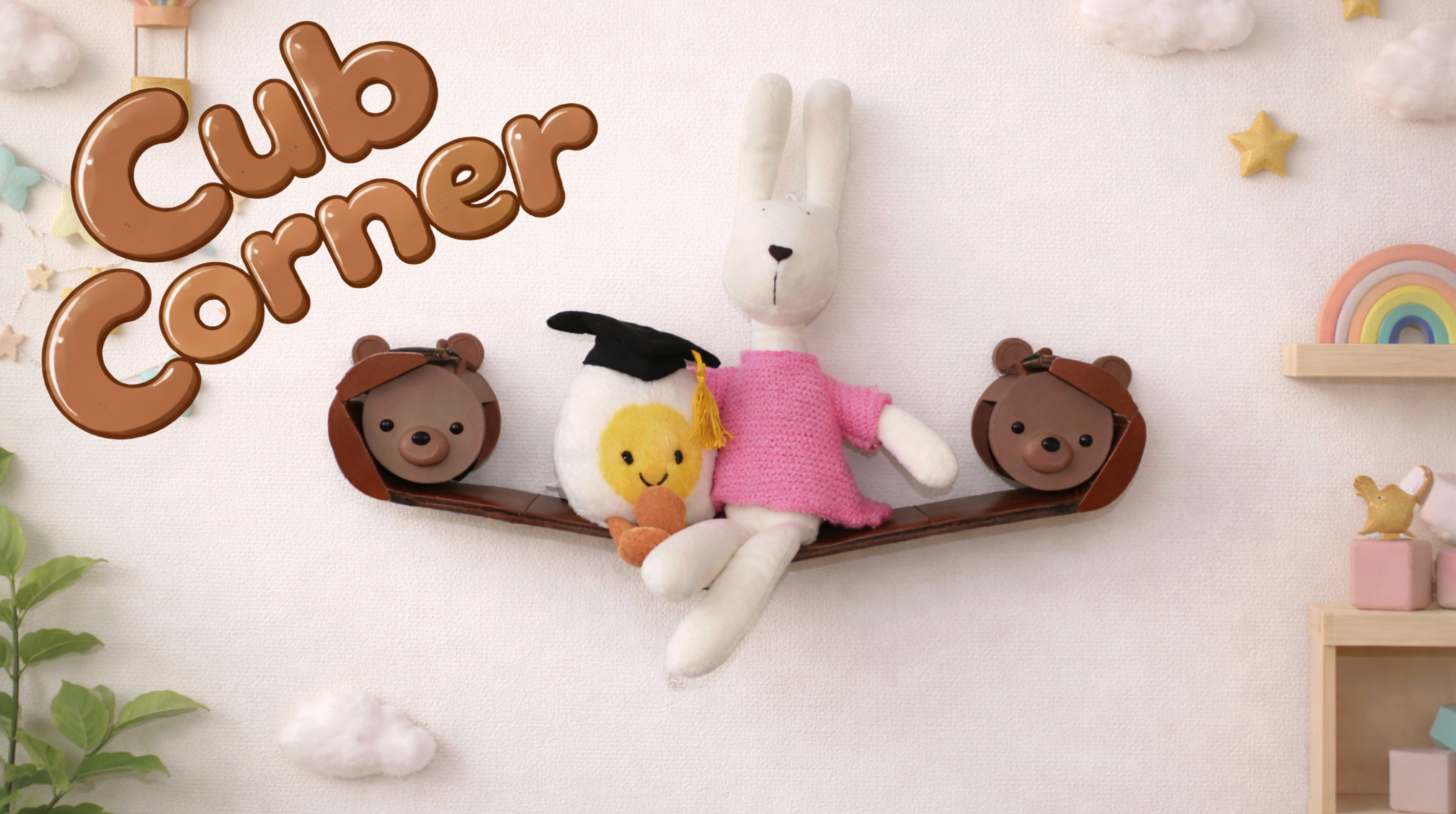
Create compact, flexible storage that displays plush toys clearly and can be repeated across a wall.
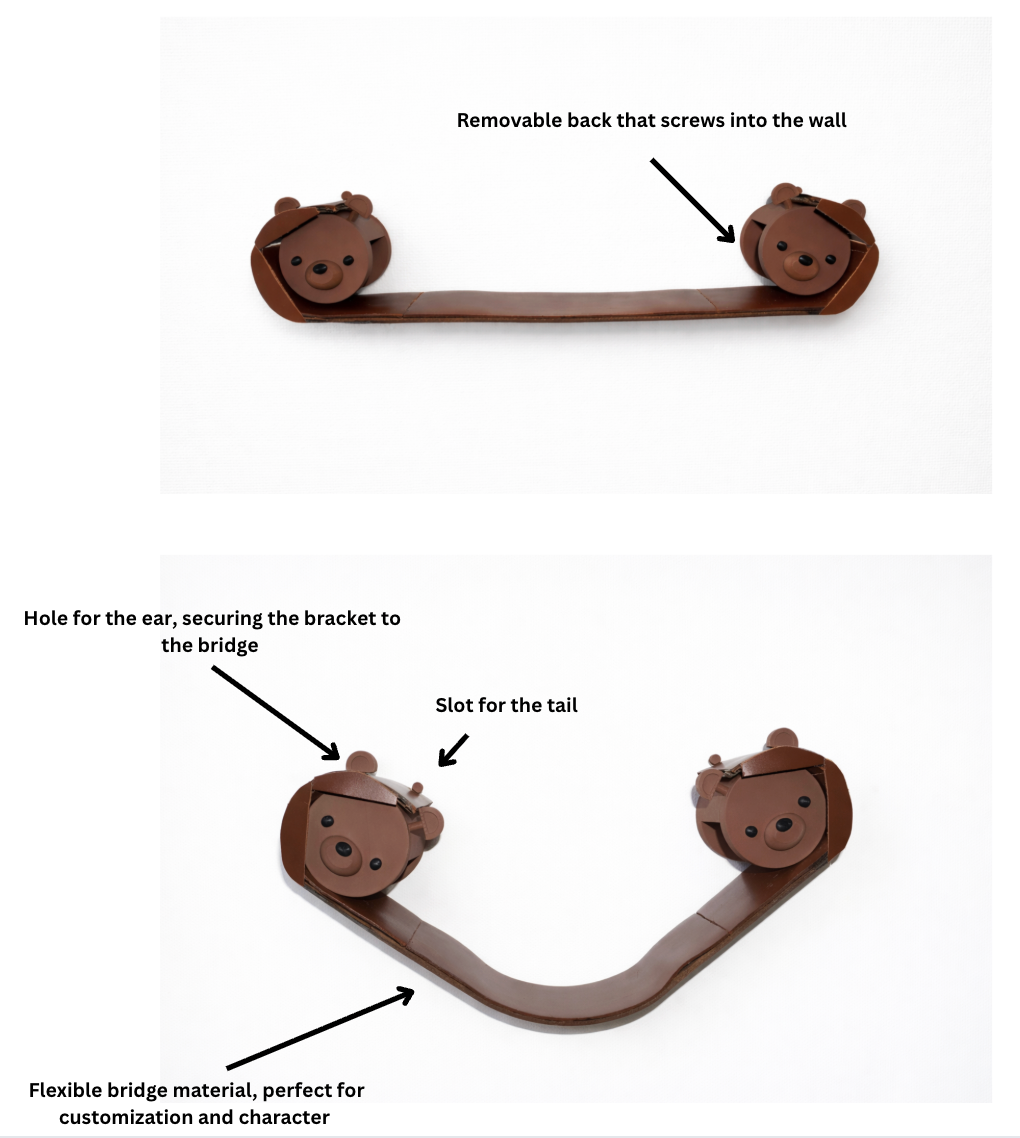
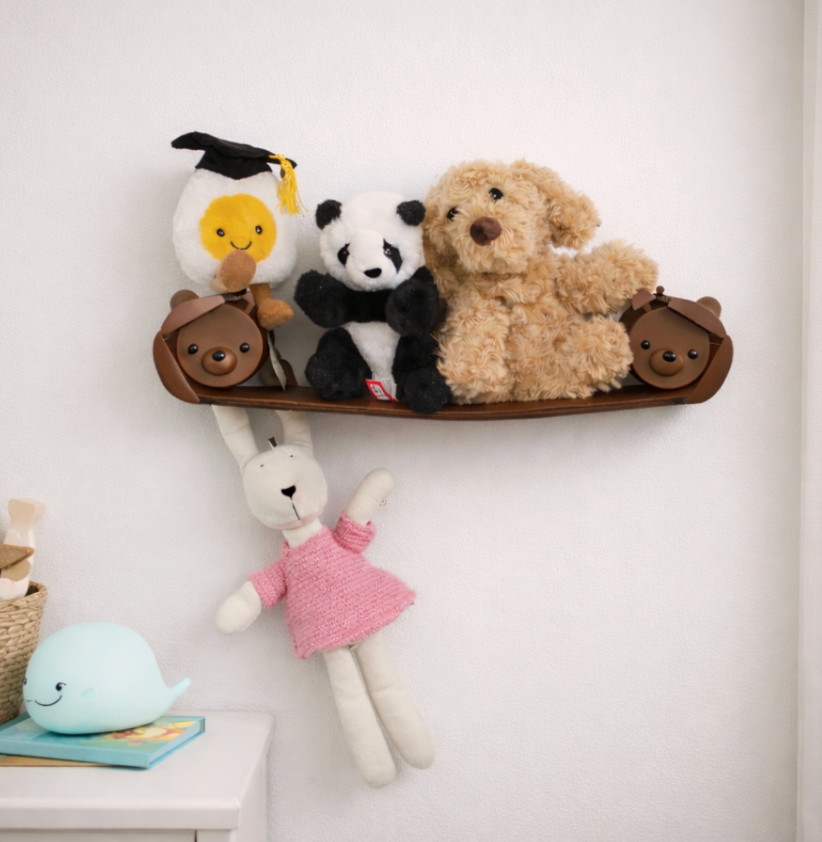
A leather bridge held by playful bear brackets creates a supportive shelf with multiple ways to arrange and display toys.
Context + Opportunity
Most plush storage products contain toys in one large pile. Cub Corner instead creates a compact, repeatable display that uses wall space vertically.
The concept adapts the flexibility and tension of hammock-style storage into a smaller shelf with a more structured bridge. Toys can rest on top or tuck between the leather layers, while bear-shaped brackets make the attachment system part of the experience.
- Project
- Individual studio project
- Focus
- Form, function, fabrication
- Tools
- CAD, 3D printing, laser cutting
- Prototype materials
- Leather, four-layer chipboard reinforcement, 3D-printed resin
Iteration
Form development began with the attachment system
The concept began with two functional needs: a flexible bridge that could use tension, and rounded brackets that would leave space for storage. The bear form emerged from the objects the shelf was designed to hold.
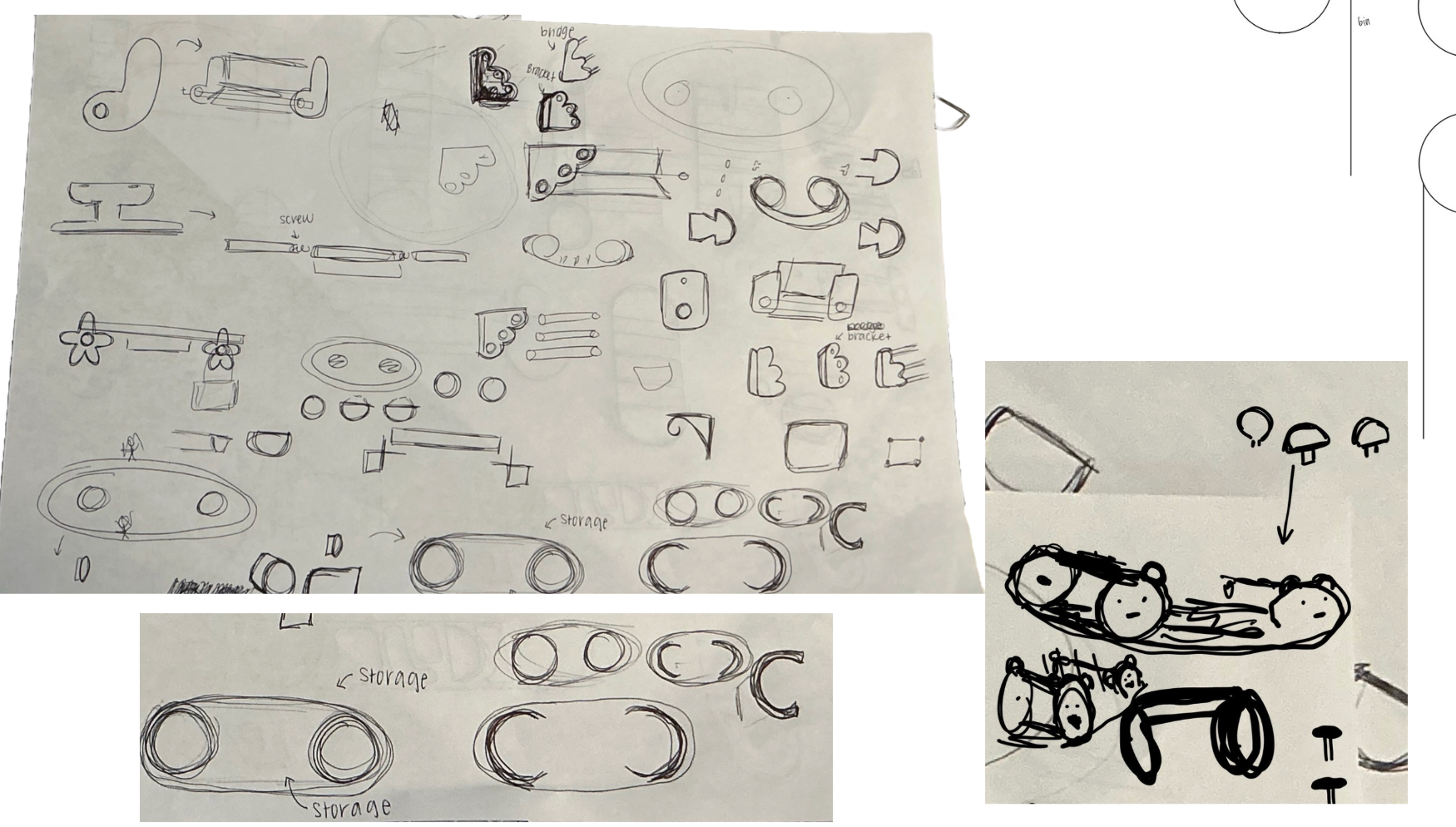
Each visual feature gained a structural role
From circle to character
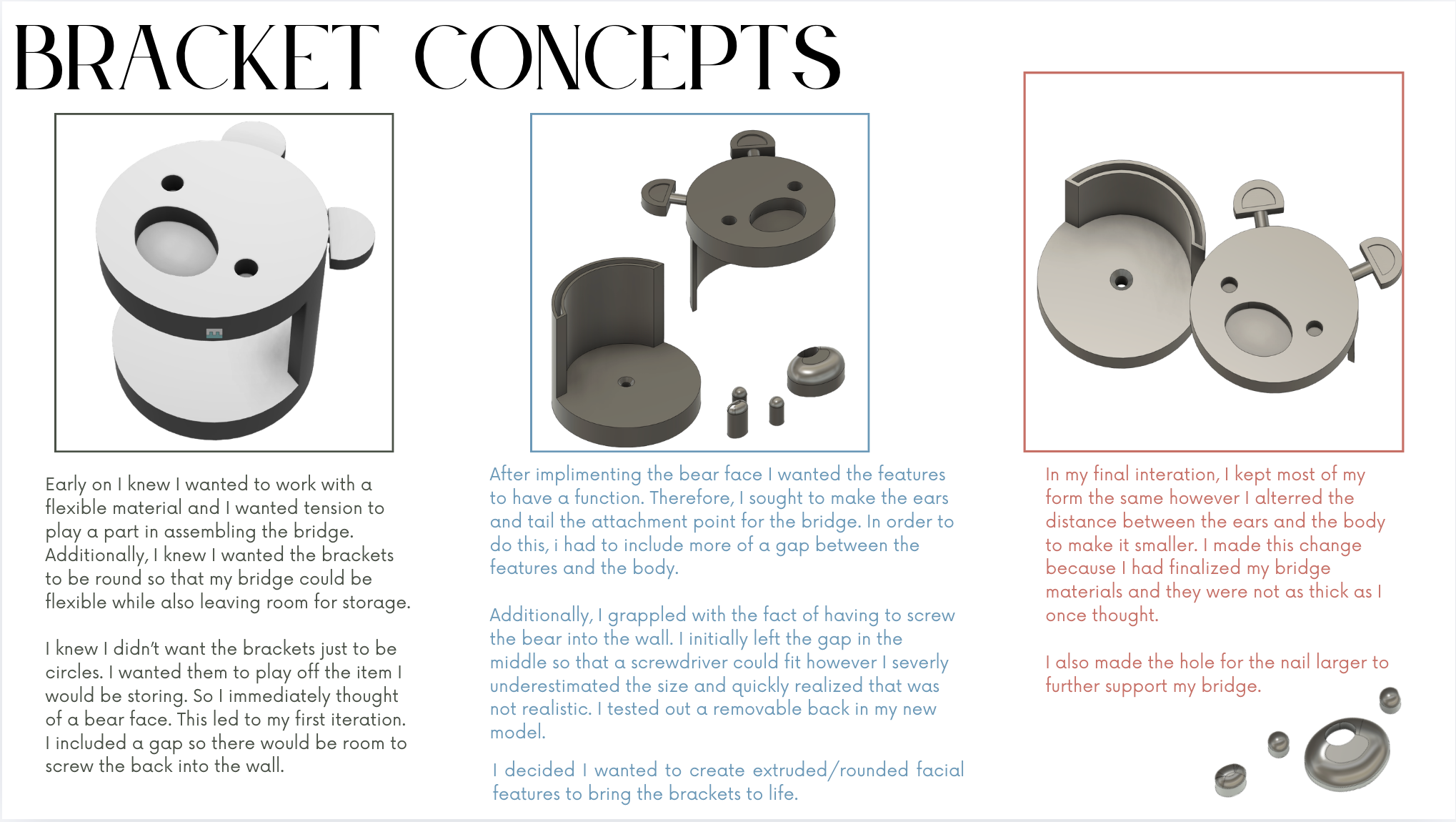
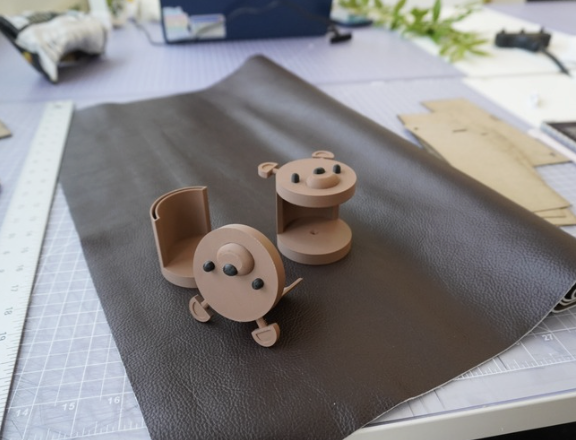
The original round bracket gained a bear face to connect the shelf visually to its contents.
Features become fasteners
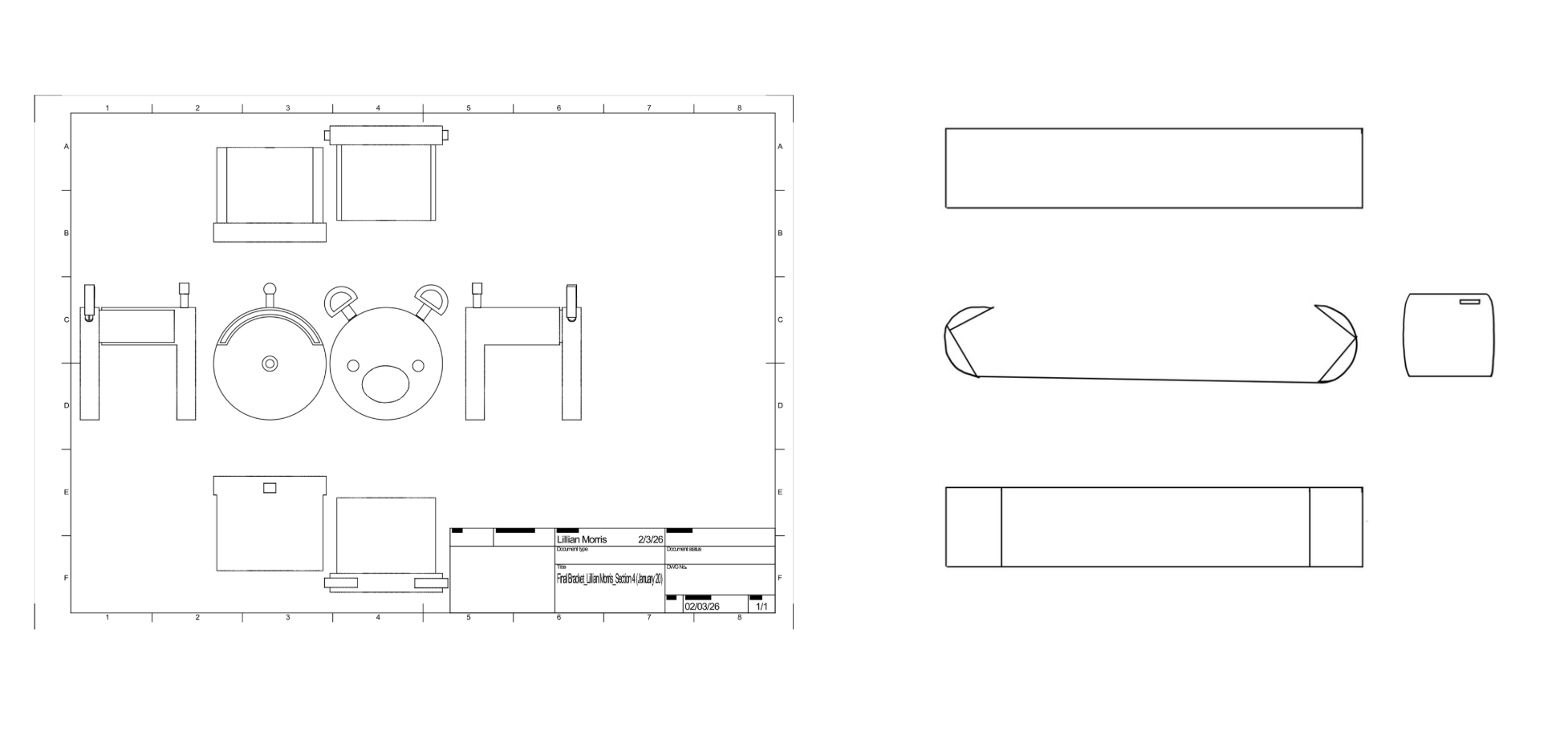
The ears and tail evolved into attachment points, securing the flexible bridge without adding separate visible hardware.
A realistic wall connection
An early screwdriver opening proved too small. A removable back created practical access for mounting while preserving the character’s face.
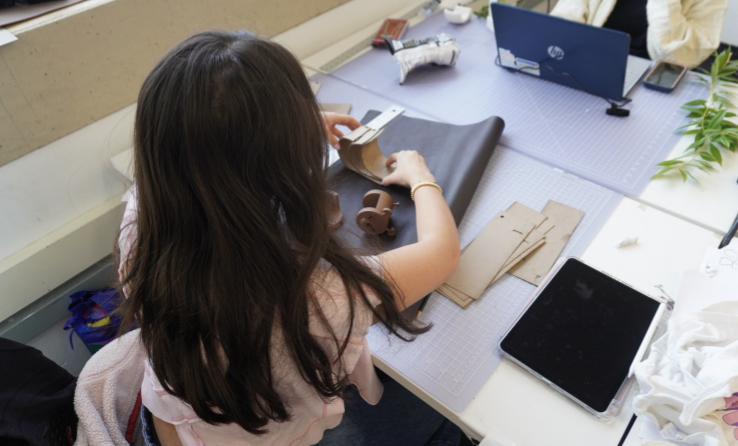
Prototyping + Fabrication
Balancing flexibility with localized structure
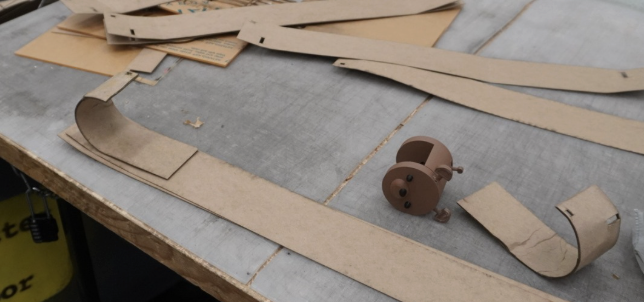
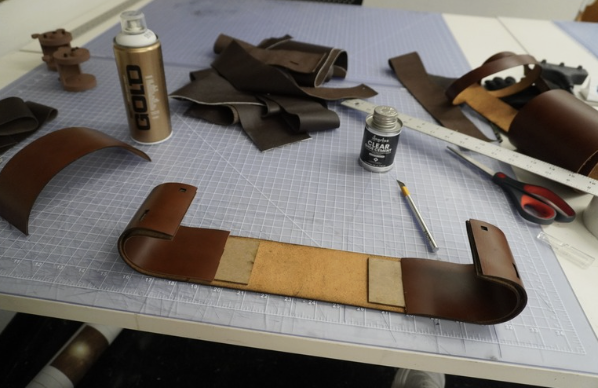
Leather gave the bridge a warm, flexible surface while allowing toys to rest both on top and between its layers. Four chipboard layers reinforced each attachment point, concentrating stiffness where the bridge transfers load into the brackets.
The bracket prototypes were 3D printed in resin. Once the bridge material was finalized, the ear-to-body clearance was reduced to better capture the thinner leather-and-chipboard assembly. The mounting hole was enlarged, and a removable back replaced an undersized screwdriver opening.
Resolution + Validation
A compact shelf with an integrated assembly system
The final bridge slides securely around the brackets’ ears and tail. A continuous slot replaced the earlier tail-shaped opening, making assembly simpler while preserving the expressive form.
Prototype scope: This model validates scale, assembly, material behavior, and display configurations. Before production, the next round would quantify supported load, wall-fastener pullout, bracket-slot tolerance, and long-term leather deformation.
Manufacturing direction: A production version could replace the resin print and layered chipboard with a molded bracket and a die-cut reinforced bridge. Cost, child-safe finishes, cleanability, and repeatable mounting dimensions would be evaluated before specifying final materials.
Final outcome
Cub Corner
Playful enough to belong in a child’s room.
Purposeful enough to bring order to it.