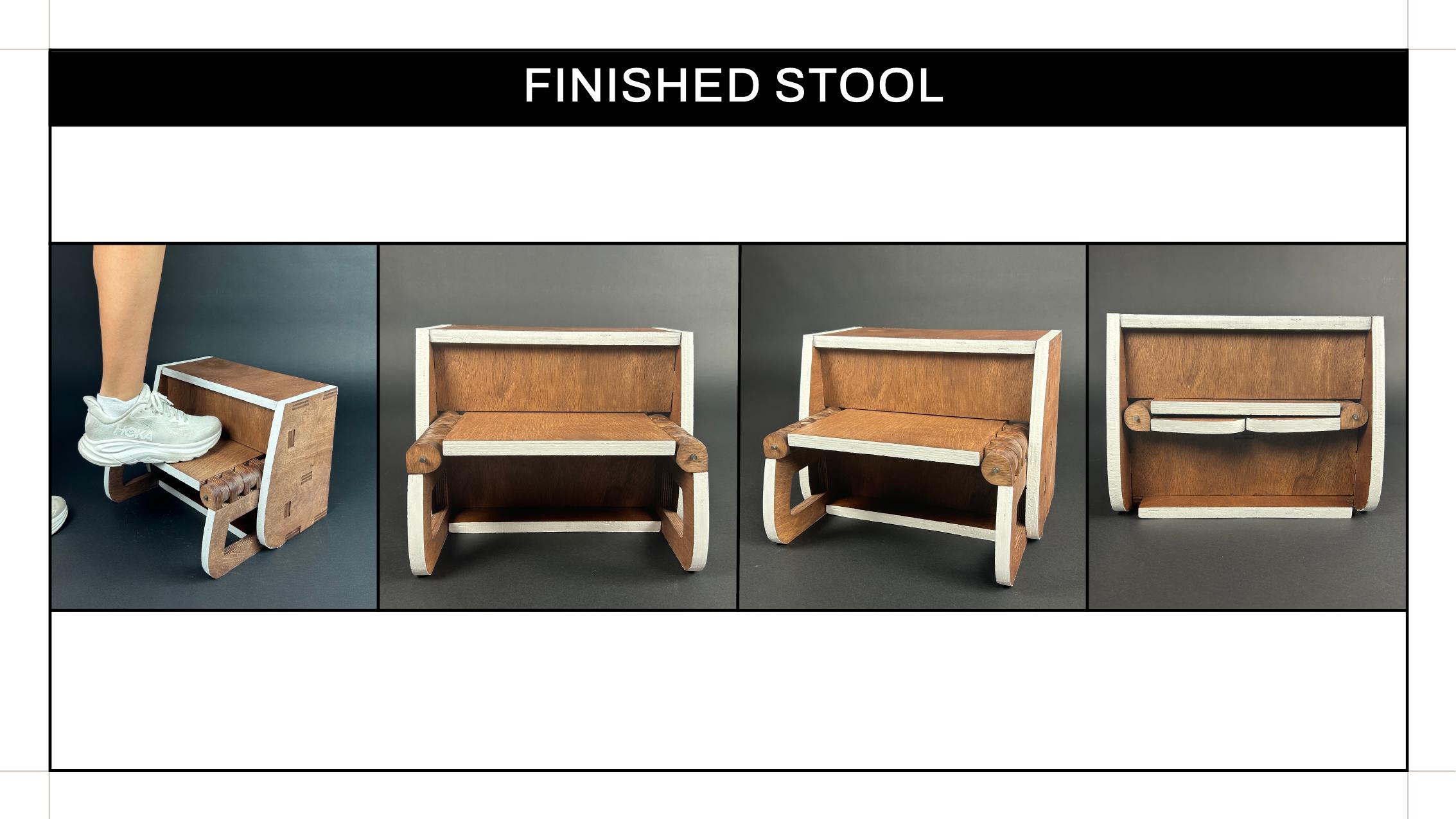
Many bedside steps are bulky, visually clinical, or designed for only one type of user.
Furniture + Inclusive Design2026
Step
Up
A compact bedside step stool with a foldable second step, designed to make getting on and off the bed safer and easier.
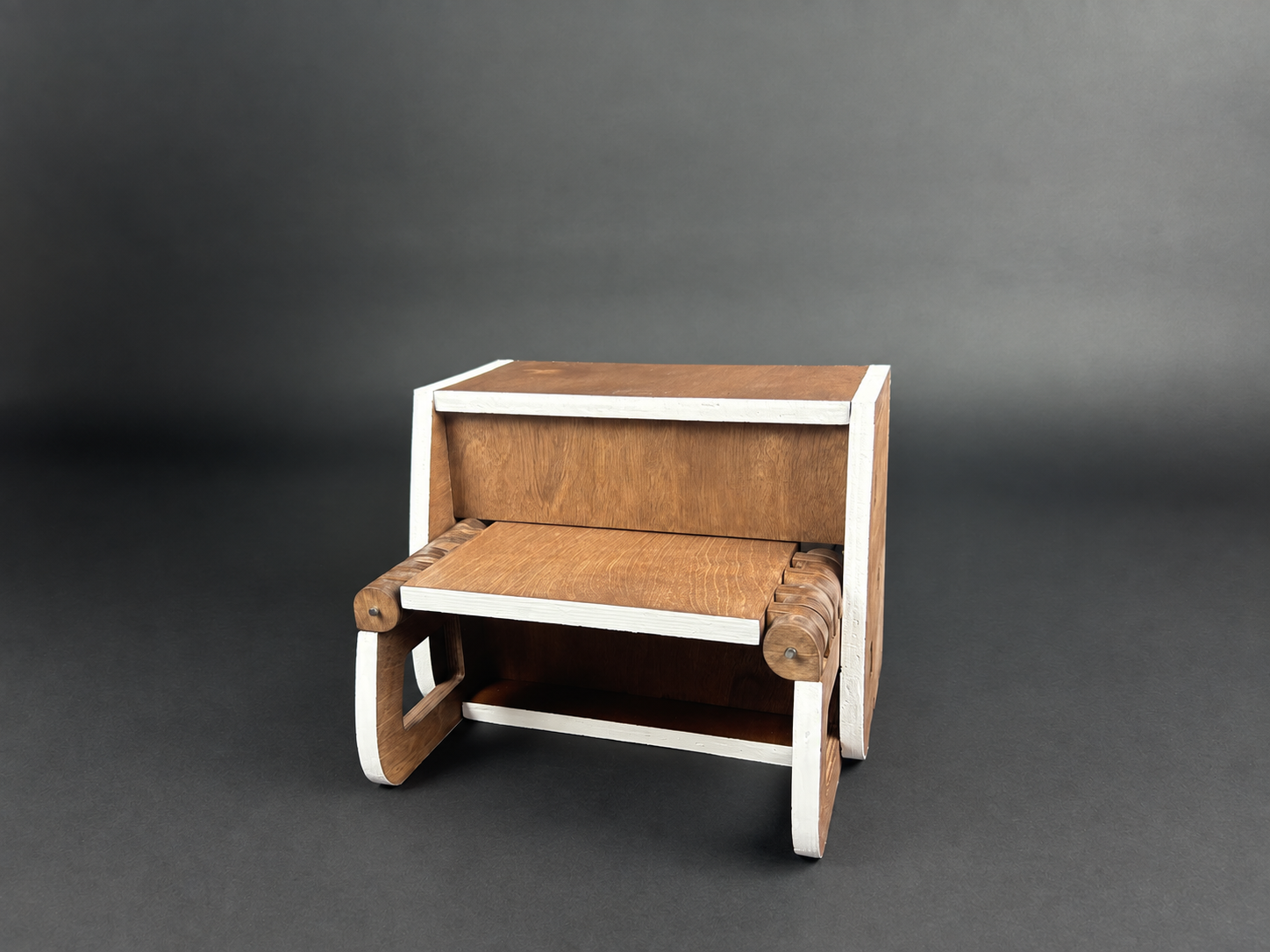
Make getting on and off a bed safer for children, older adults, pets, and anyone who benefits from a lower first step.
A furniture-like wooden stool with a folding second tread provides extra support when needed and stays compact when stored.
Overview
A bedside step for more than one kind of user.
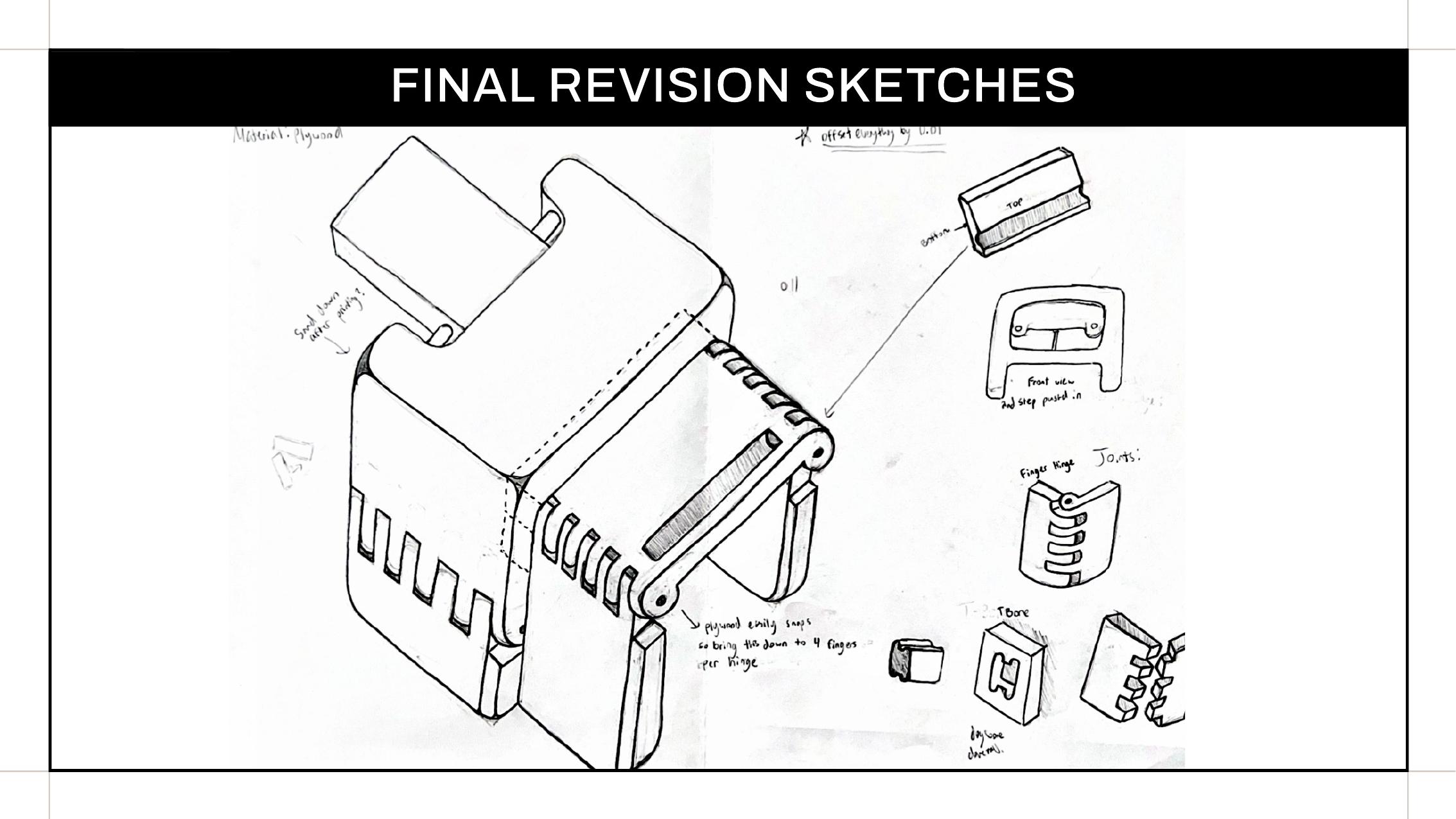
Originally explored for small dogs struggling to reach a bed, Step Up developed into an inclusive aid for children, older adults, pets, and anyone who benefits from a lower first step. The second tread folds into the frame to reduce its footprint when not in use.
- Project
- Individual furniture studio
- Focus
- Inclusive access, compact storage
- Process
- Scale modeling, hinge testing, fabrication
- Outcome
- Functional full-scale prototype
Opportunity
A safer bedside aid that belongs in the room
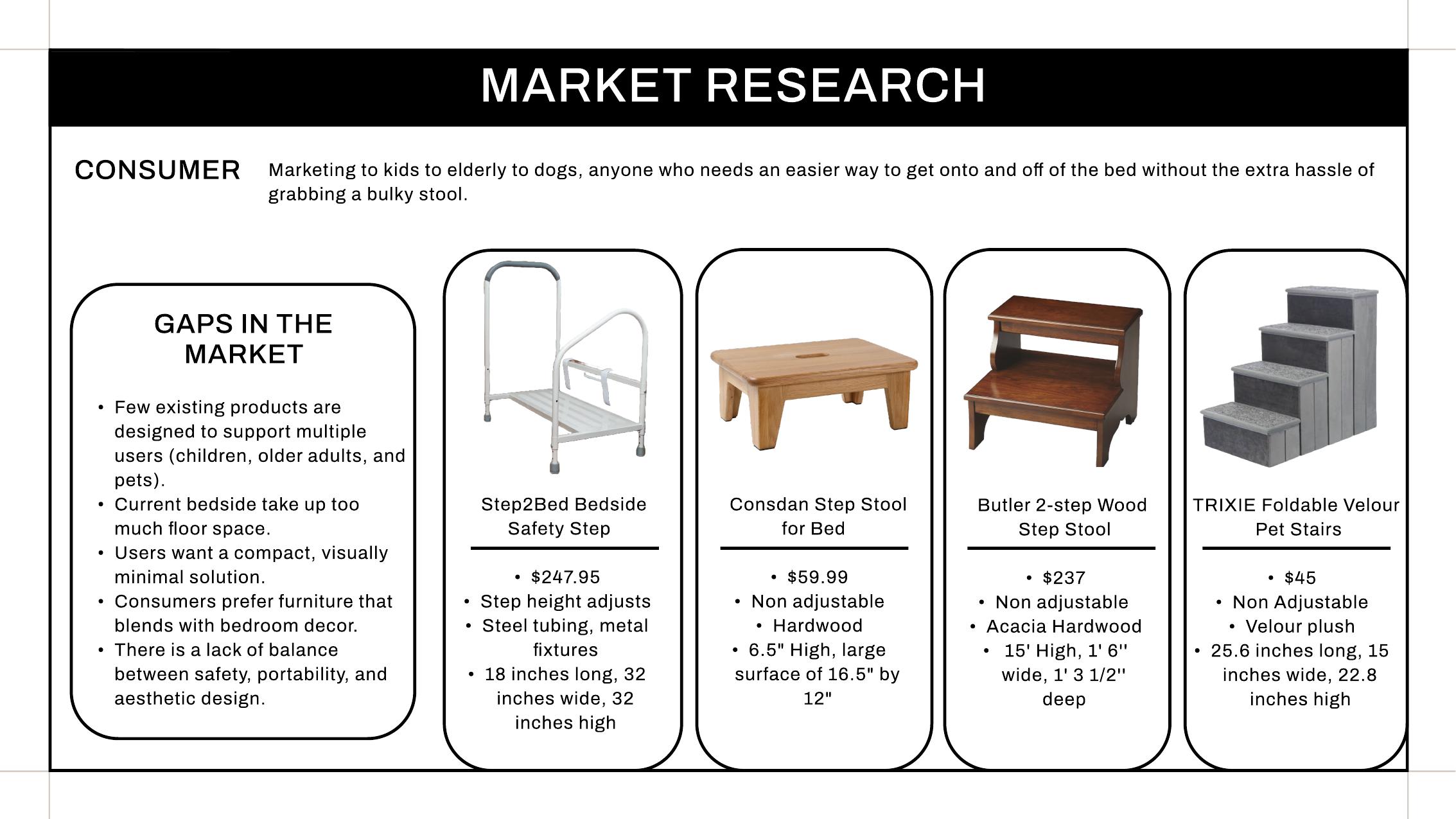
Existing solutions typically target only one user group. Pet stairs can dominate a small room, while medical bedside steps often rely on exposed metal and institutional forms.
Step Up explores a furniture-like alternative that balances safety, portability, and a quiet visual presence in the bedroom.
Design Criteria
Compact in storage, supportive in use
Two usable steps, foldable hardware, and lightweight wood construction.
A minimal furniture-like form, rounded edges, and a stable two-leg stance.
Subtle design accents and a bedside connection if testing proved it necessary.
Depend on electronics or technology to solve a fundamentally physical problem.

Ideation
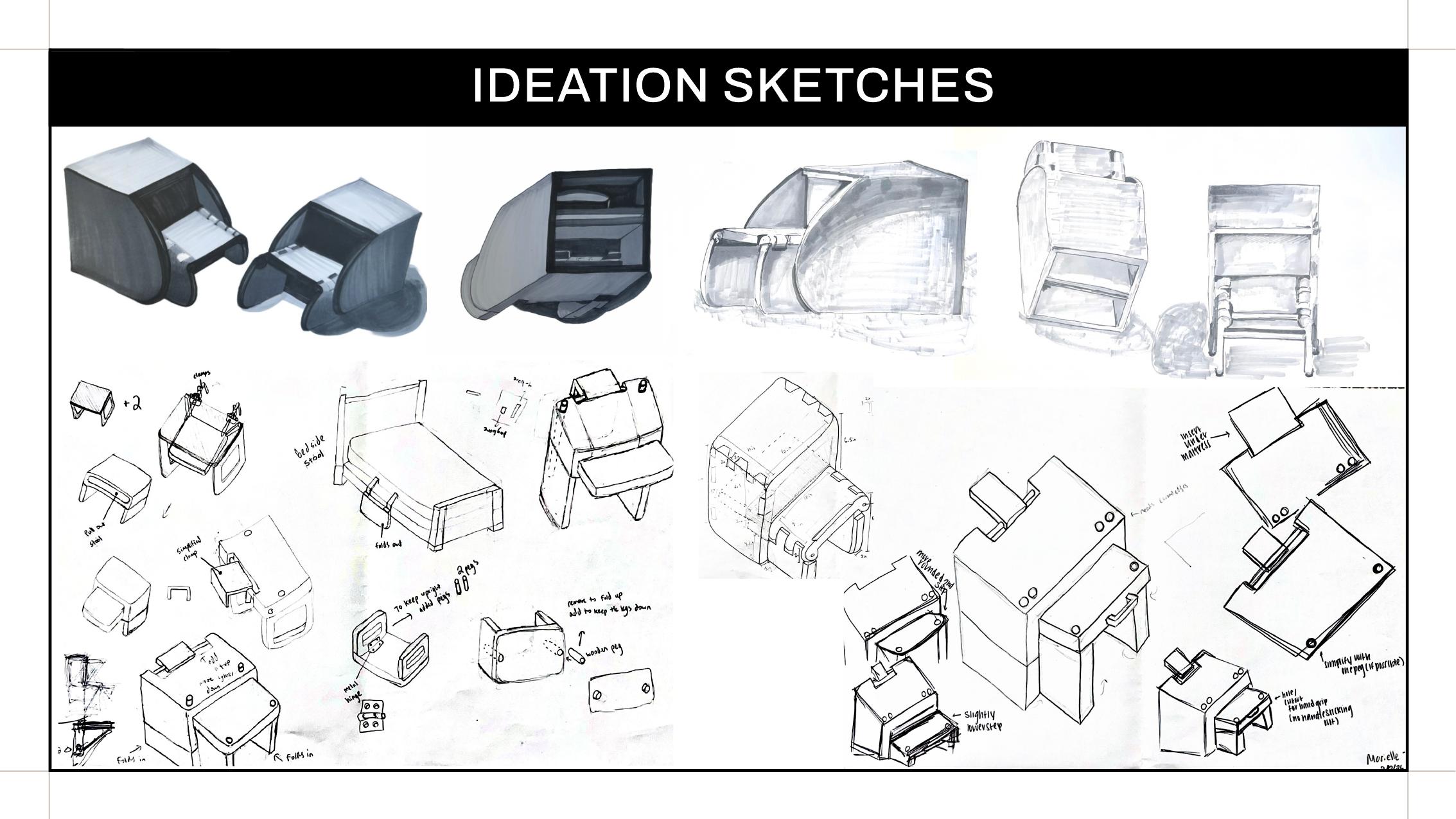
Exploring how the second step folds away
Scale Models
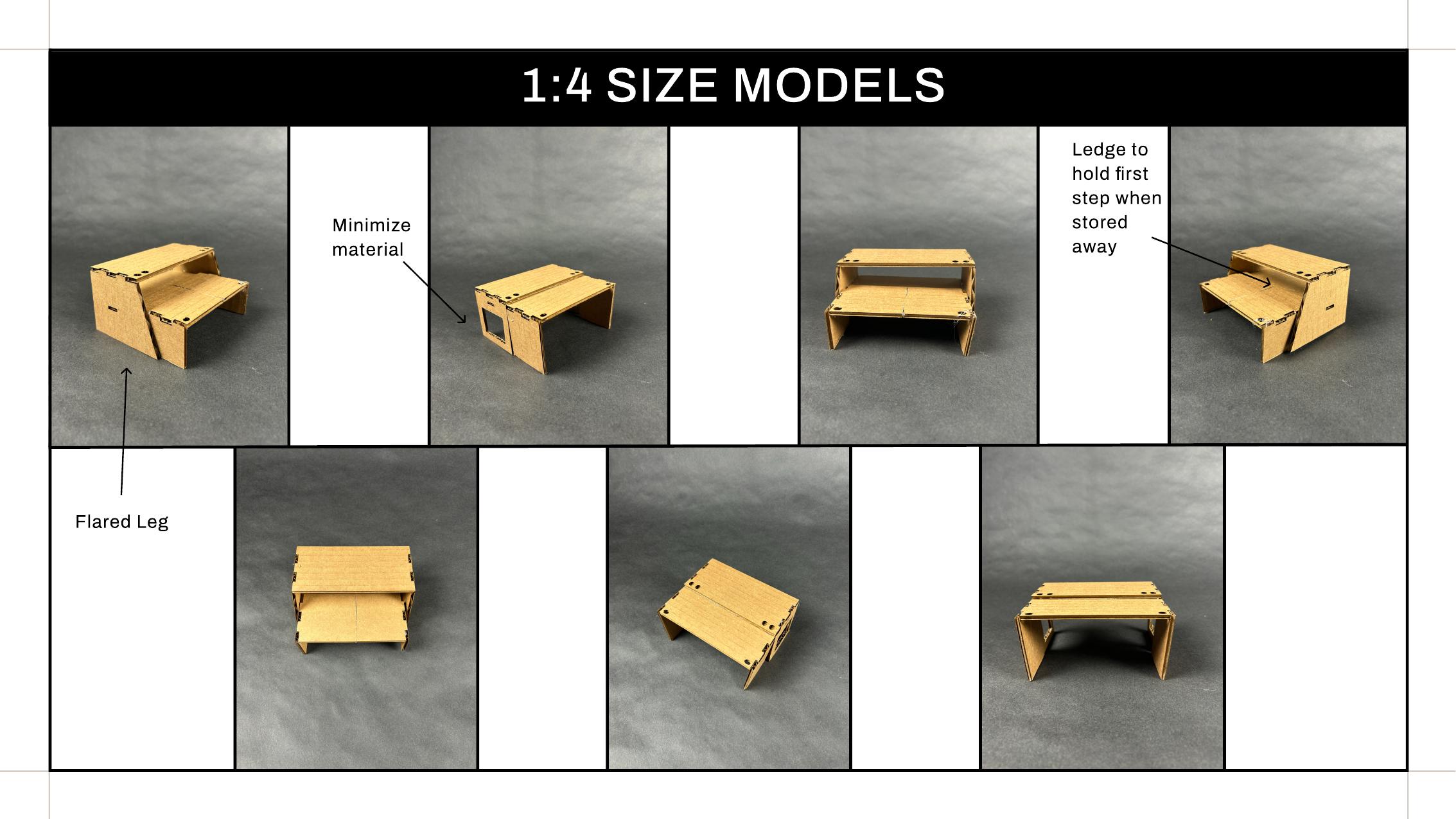
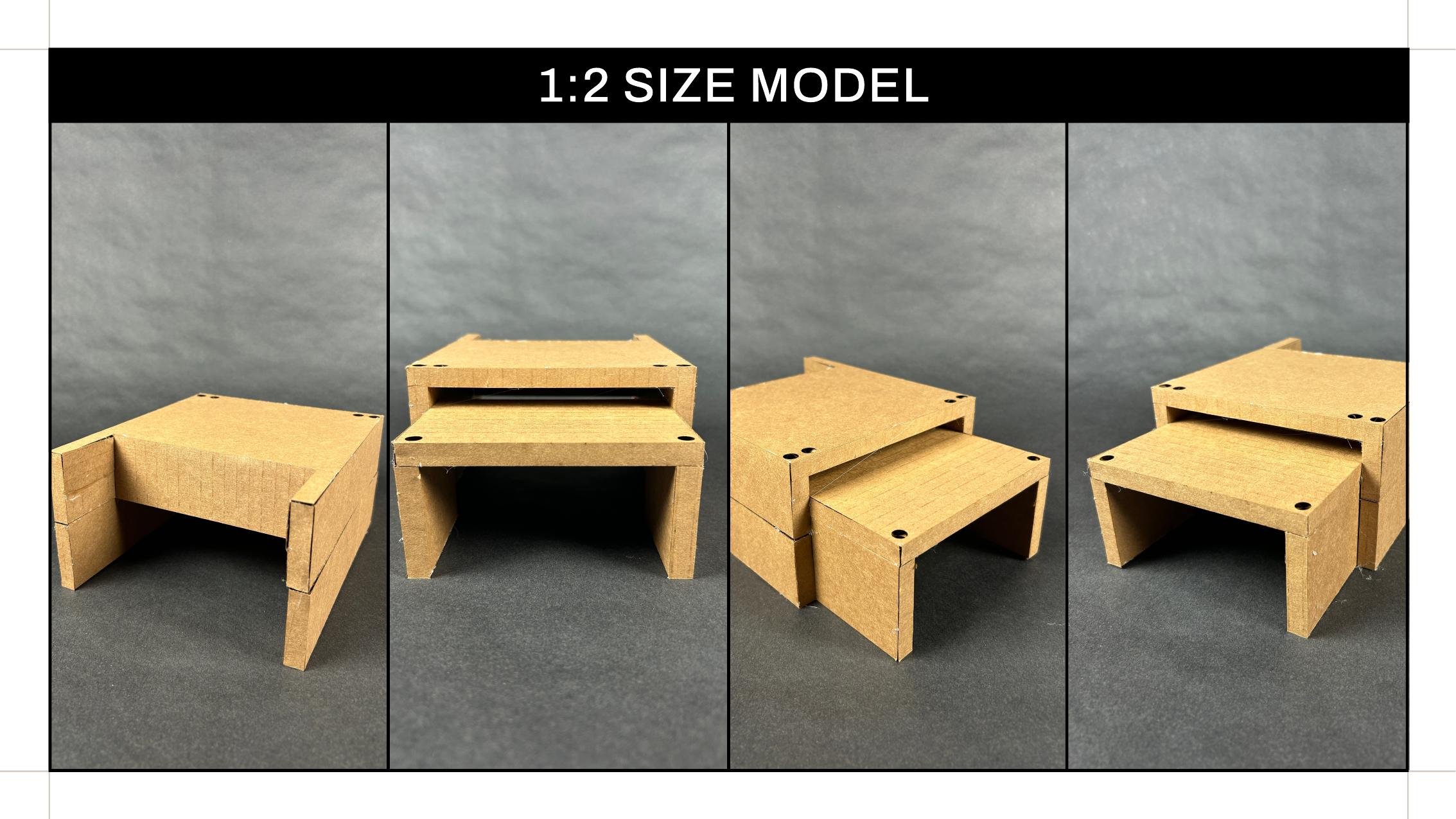
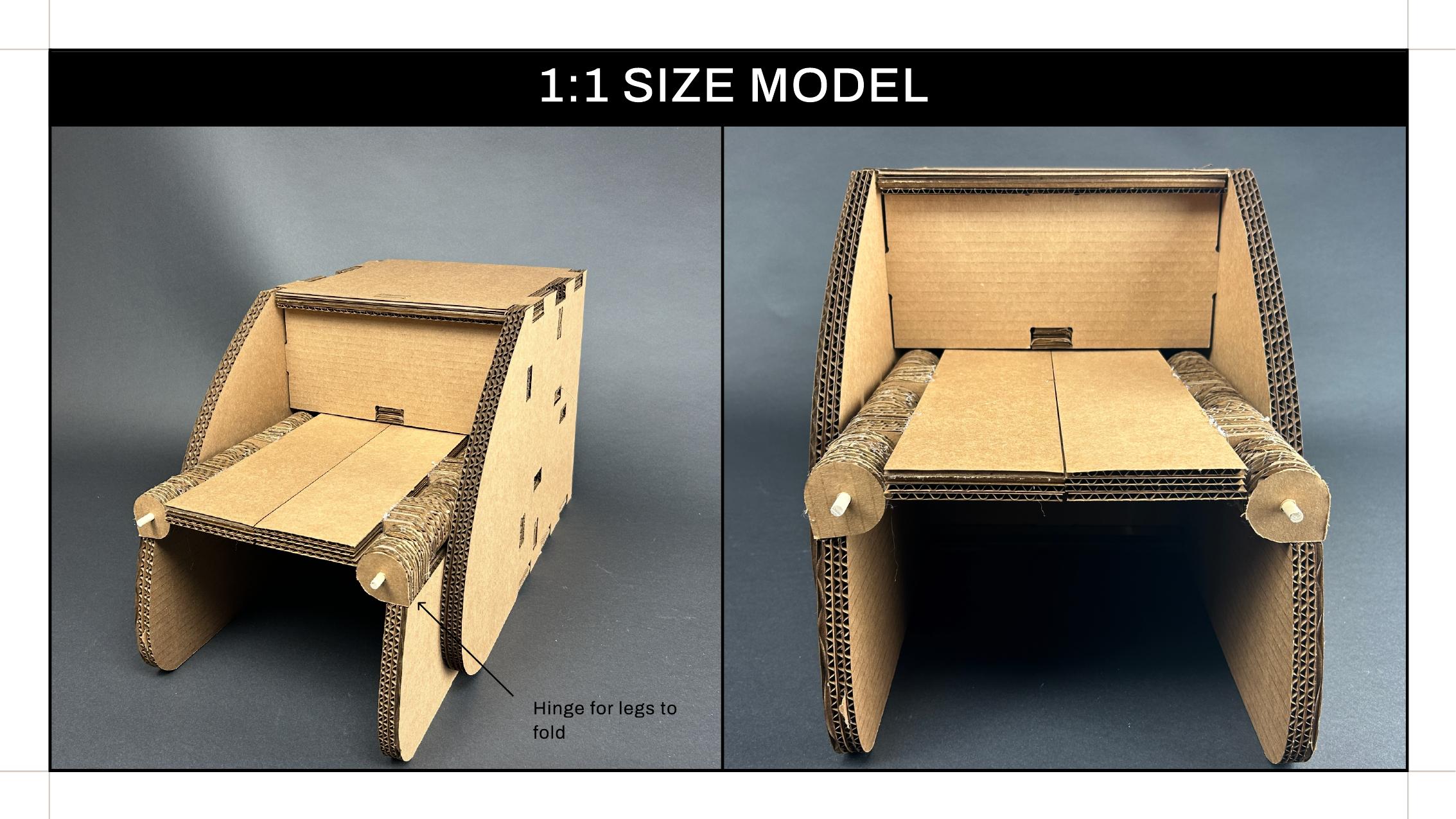
Testing the same idea at three scales
Reduced material, tested a flared leg, and added a ledge to retain the folded step.
Evaluated overall proportions, tread depth, and how the folded step nested into the frame.
Tested real body scale, hinge placement, entry height, and stability before final fabrication.
Development
Translating the mechanism into buildable parts
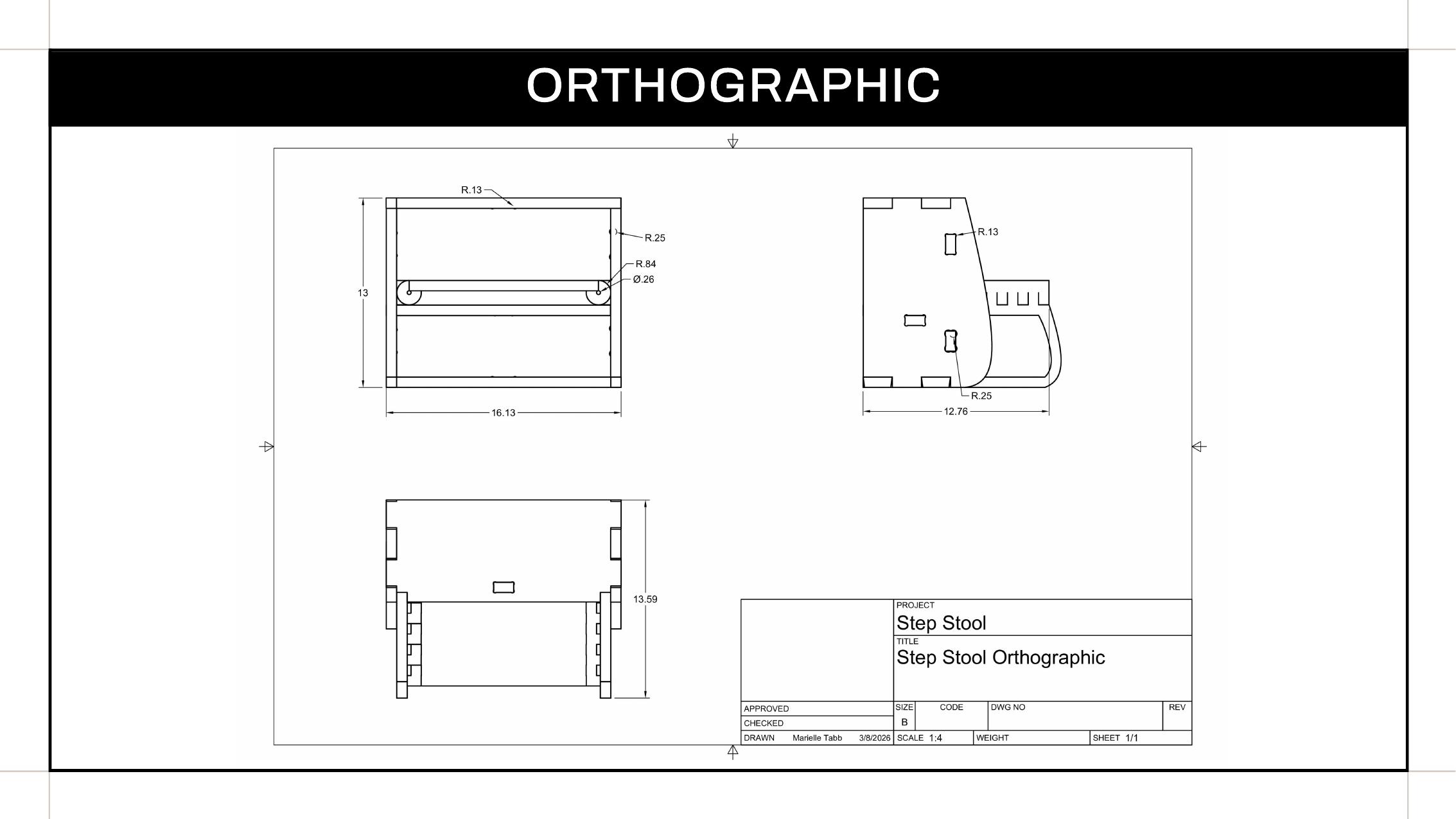
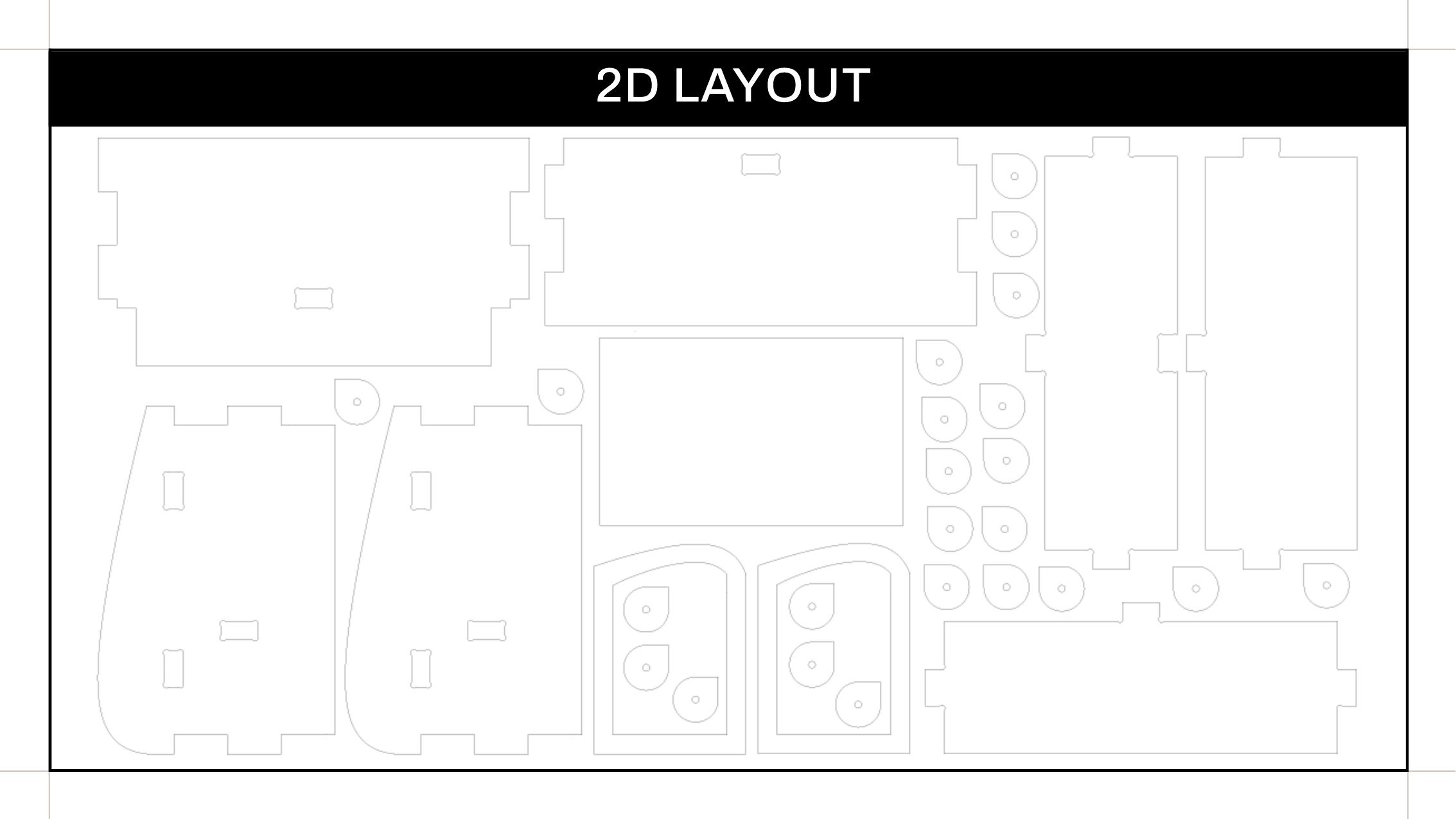
Orthographic drawings established final dimensions before the components were translated into a two-dimensional cutting layout. The full-scale model located the leg hinges and confirmed the folding path before assembly.
Material + Finish
Choosing a finish for daily bedroom use
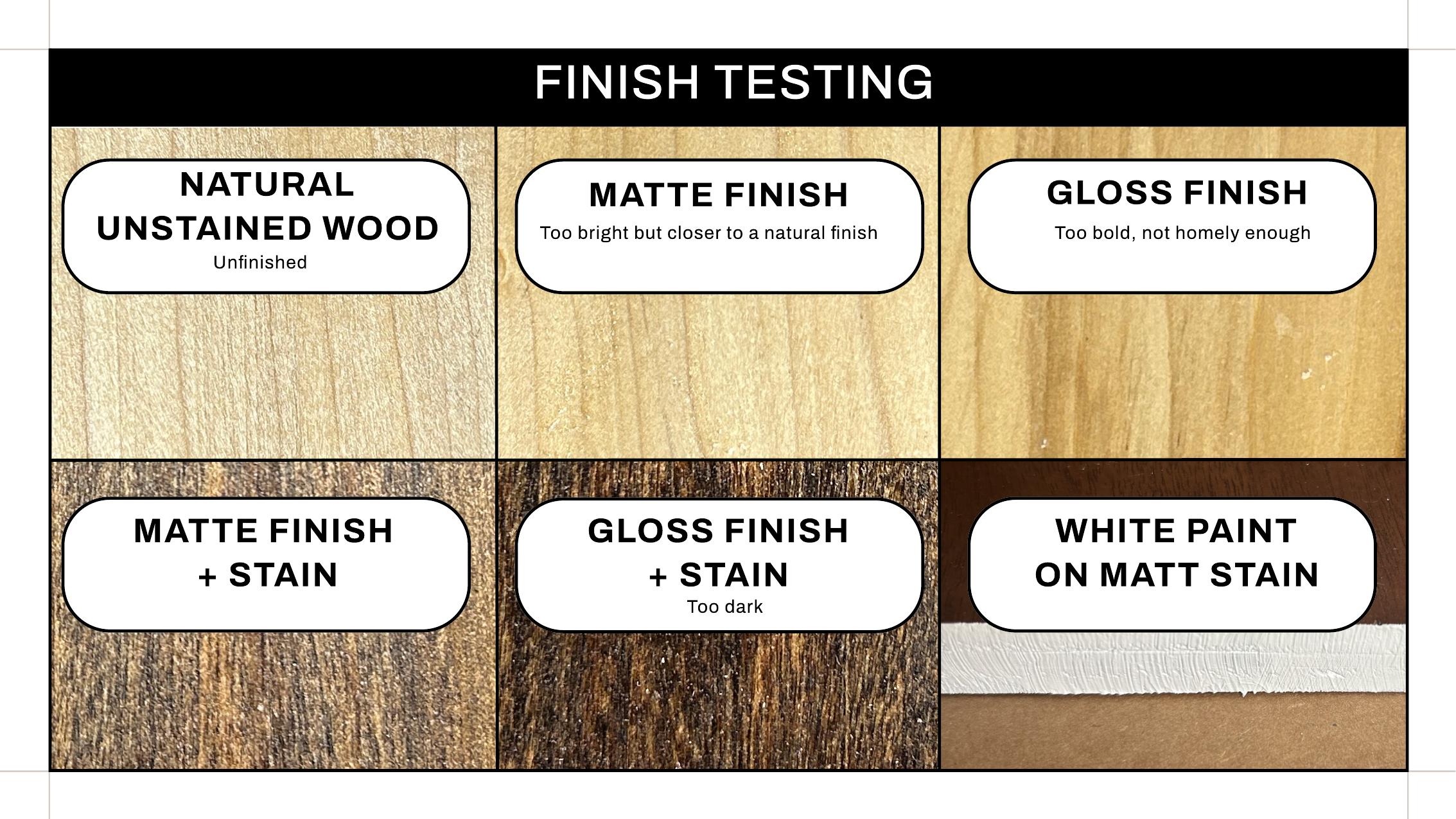
Finish samples compared natural wood, matte and gloss clear coats, stains, and paint. Dark stain felt too heavy; gloss looked overly bold. A lighter, low-sheen finish best preserved the furniture-like quality of the wood.
Assembly
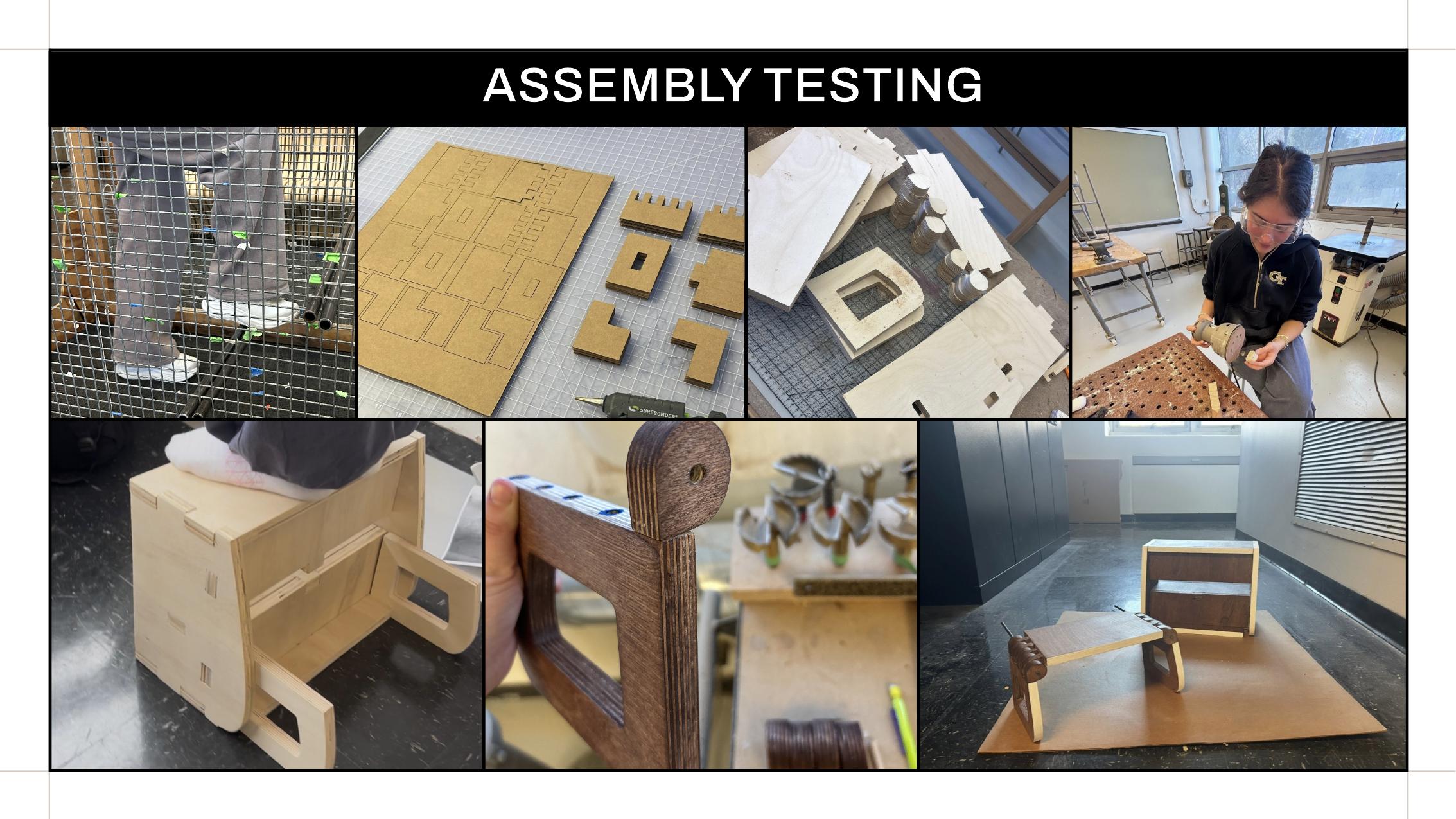
Checking the folding path during assembly
Final Outcome
Step Up
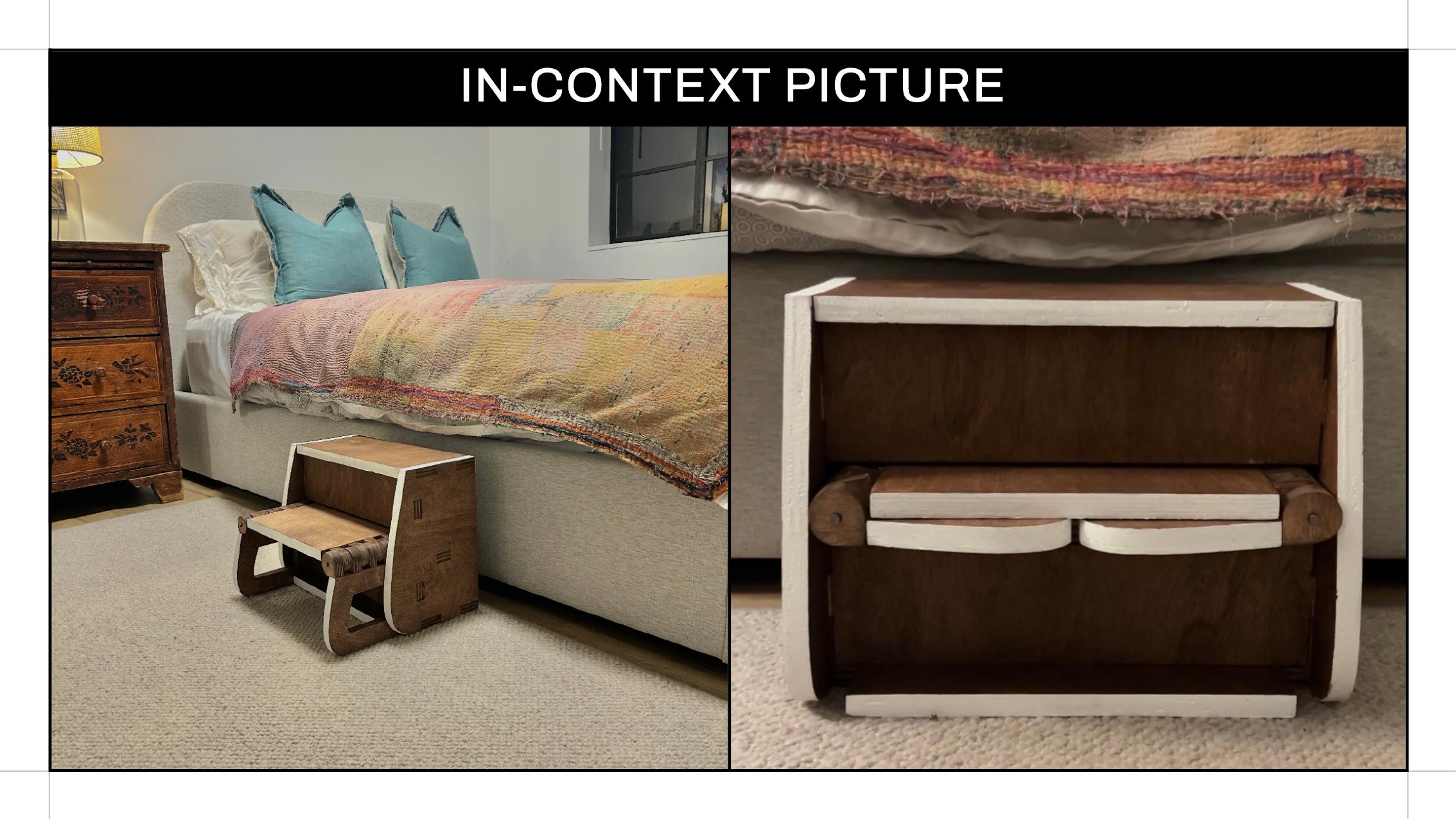
A compact piece of bedside furniture that expands only when the user needs it.
Next project: Strata Sole →